Why I’m Documenting My Business Journey Before I Become Successful
A lot of people start documenting their journey after they’ve already made it.
They show you the successful business, the large orders, the beautiful packaging, the growing social media accounts, and the money coming in. They can tell you how they started, but you’re hearing the story after they already know how it ends.
I want to do something different.
I want to document my journey while I’m still building.
I want people to see the mistakes, the small wins, the behind-the-scenes work, the days when orders are slow, the products I’m testing, my family life, my YouTube journey, and everything that happens before I reach the level of success I’m working toward.
Because right now, I’m not telling my success story.
I’m living it in real time.
I Want People to See Where I Started
Britt’s Decorative Candles didn’t start with a huge investment, employees, a warehouse, or thousands of customers.
I started with $20, a kitchen counter, and a lot of trial and error.
That beginning is important to me.
As my business grows, it would be easy to forget some of these moments. That's one reason I want my blogs, YouTube videos, pictures, and social media posts to become a record of what this chapter of my life actually looked like.
I want to remember what it felt like to make products while still learning.
I want to remember getting excited about an order.
I even want to remember the things that went wrong because those experiences are part of my story too.
If I only start documenting once everything is successful, people will see the results without seeing what it took to get there.
I Want My YouTube Channel to Show the Real Process
My YouTube channel isn't only about promoting my products.
It's becoming a place where I can document my life.
I can show my children, my family, my lifestyle, and the behind-the-scenes process of building my business. I can take people along while I make products, prepare orders, introduce something new, work on my website, market my business, and figure out my next move.
And everything isn't going to look perfect.
That's intentional.
I don't want someone to discover my channel years from now and only see success. I want them to be able to scroll backward and actually watch the transformation.
I want them to see when the views were smaller.
I want them to see when the audience was still growing.
I want them to see the kitchen-counter stage.
And hopefully, one day, they'll be able to compare that beginning to where I've gone.
Building a Business Is More Than Making a Product
One thing I've learned is that making a good product is only part of running a business.
You have to learn how to get people to notice it.
That means marketing.
It means posting on social media consistently, creating videos, taking pictures, writing blogs, improving your website, talking about your products, reaching new customers, and continuing to introduce your business to people who may have never heard of you.
And then comes another challenge:
Turning attention into customers.
A person can watch a video without buying anything. Someone can follow your social media page for months before visiting your website. Another person might see your business several times before finally placing their first order.
I'm learning that conversion takes time.
That's another part of this journey I want to document.
I Want People to See the Mistakes Too
Entrepreneurship isn't a straight line.
I've already experienced situations that didn't go according to plan.
My first wholesale order taught me that in a very real way. I shipped 120 pumpkin wax melts to Texas during the summer, and they arrived melted.
Was that the story I wanted to tell?
Of course not.
But it became one of the most valuable experiences I've had as a business owner.
It taught me about packaging, heat, shipping wax products, communication, problem-solving, and taking responsibility when something goes wrong.
Those are the stories I don't want to hide.
If I'm documenting the journey, I can't only document the victories.
Sometimes the lesson is the story.
I Want My Customers to Know the Person Behind the Products
There are thousands of candle businesses.
So why should someone remember mine?
I believe part of the answer is connection.
When someone watches my YouTube videos, reads my blogs, or follows me on social media, I want them to understand why I'm passionate about what I'm creating.
They're not just seeing a candle sitting on a table.
They're seeing the person who poured it.
They're seeing the thought behind a new fragrance.
They're seeing me get excited about creating something new.
They're watching me balance everyday life, family, work, content creation, and entrepreneurship.
Over time, I hope that creates something extremely important:
Trust.
I don't want people to feel like I'm constantly appearing online just to ask them to buy something. I want to give them a reason to follow the story.
I Want to Remember Who I Was Before Everything Changed
This may be the biggest reason I'm documenting everything now.
I believe I'm building toward something bigger.
I don't know exactly how long it will take. I don't know which opportunity will create the biggest change. I don't know which video will reach the right person, which product will become a bestseller, or which business decision will eventually become a turning point.
But I know I want a record of who I was before it happened.
One day, I want to watch an old video and remember the woman who was trying to figure everything out.
I want to read an old blog and remember how badly I wanted this.
I want my children to be able to see it too.
Not just the result.
The work.
I'm Building My Story While I'm Building My Business
I'm not documenting this journey because I have all the answers.
I'm documenting it because I don't.
I'm learning in public.
I'm growing in public.
I'm building in public.
There are going to be mistakes, changes, slow seasons, exciting opportunities, new products, unexpected problems, and hopefully some incredible milestones.
And I'm going to keep documenting them.
Because if Britt's Decorative Candles becomes everything I believe it can become, I don't want to have to recreate the story of how I got there.
You'll already be able to see it.
From $20 and a kitchen counter to whatever comes next.
This is the part of the story people usually skip.
I'm choosing to record it.
Starting Over in My 30’s and Building Something Of my Own
There comes a point in life when you realize that just because you've spent years doing something one way doesn't mean you have to spend the rest of your life doing it that way.
For me, that realization came in my 30s.
I'm 37 years old, a mother, a full-time worker, a business owner, and a content creator. I'm also a woman who is still figuring things out. I'm learning that starting over doesn't always mean you've failed. Sometimes starting over means you've finally decided to build the life you actually want.
I'm building Britt's Decorative Candles, growing my YouTube channel, creating content, raising my children, working, and trying to turn my ideas into something that can eventually change my life.
And I'm doing it one day at a time.
Starting Over Doesn't Mean Starting From Zero
When I say I'm starting over, I don't mean that everything I've done before now was wasted.
My experiences have taught me patience, responsibility, consistency, and how to keep going even when I'm tired.
I'm bringing all of those lessons with me.
But I'm also allowing myself to dream differently.
I want to build something that belongs to me. I want to create a business that people recognize and trust. I want to grow a YouTube platform where people can follow my real journey—not just after I become successful, but while I'm working toward it.
That's an important difference to me.
I don't want to appear one day and say, "Look what I built."
I want people to be able to say, "I watched you build it."
Building My Business From the Ground Up
Britt's Decorative Candles didn't begin with a huge budget or a professional production facility.
I started with $20, a kitchen counter, and a lot of trial and error.
I've had to learn by doing.
I've learned about wax, fragrance oils, wicks, temperatures, packaging, shipping, labels, websites, wholesale, marketing, customer service and everything else that comes with trying to turn a product into a real business.
Some lessons have been exciting.
Others have been expensive.
There have been moments when something didn't turn out the way I expected. But I've learned that mistakes don't automatically mean it's time to quit. Sometimes a mistake is simply information.
It tells you what needs to change the next time.
Showing the Real Journey on YouTube
YouTube has become another part of this new chapter of my life.
I don't want my channel to only show polished moments. I want it to show my lifestyle, my family, my children, my business and the behind-the-scenes reality of trying to create something bigger for myself.
Some days that might mean making candles.
Another day it might mean preparing an order, introducing a new product, talking about something I've learned, spending time with my family or simply showing pieces of my everyday life.
I'm documenting the process because I believe there's value in seeing the middle of someone's journey.
Social media often shows us the result.
We see the successful business.
We see the beautiful house.
We see the large following.
We see thousands of orders going out.
But we don't always see the years when that person was posting consistently and hardly anyone was watching.
I'm willing to show that part.
Learning That Growth Takes Time
One of the biggest lessons I'm learning is that building something doesn't happen overnight.
You can create a website and receive no orders.
You can post a video and get very few views.
You can introduce a product that you love and discover that customers don't immediately understand why they should buy it.
That's when marketing becomes important.
I've learned that I have to keep introducing myself and my products.
I have to show people why I'm passionate about what I make. I have to explain my products, tell their stories, show how they're made and give people a reason to remember my brand.
Most importantly, I have to build trust.
Someone seeing my candle once doesn't necessarily make them a customer.
They may need to see my business five, ten or twenty times before they remember the name. They may watch my YouTube videos for months before visiting my website.
I'm learning to respect that process instead of expecting every view to immediately become a sale.
Showing Up Even When Nobody Is Clapping
This may be one of the hardest parts of starting over.
You have to learn how to keep going before you have proof that it's working.
There are going to be days when you're motivated and days when you're tired.
There will be posts that perform well and posts that don't.
There will be people who support you immediately and others who don't understand what you're trying to build.
But I don't want my consistency to depend on applause.
I'm learning to show up because I believe in what I'm building.
Every blog I write creates another way for someone to discover me.
Every YouTube video gives someone another opportunity to connect with my story.
Every social media post puts my business in front of another potential customer.
Every product I improve makes my business stronger.
Small actions begin to add up.
I'm Not Too Old to Create a Different Life
Sometimes we put imaginary deadlines on ourselves.
We think we should have accomplished certain things by 25, 30 or 35.
I'm letting go of that.
At 37, I'm still allowed to have new dreams.
I'm allowed to change direction.
I'm allowed to build a business.
I'm allowed to become a better content creator.
I'm allowed to learn things I didn't know five years ago.
And I'm allowed to create a completely different future than the one I once imagined.
This Is Only the Beginning
I don't know exactly what Britt's Decorative Candles or my YouTube channel will look like several years from now.
That's part of what makes documenting this journey exciting.
One day, I want to come back and read these early blog posts. I want to watch my old videos. I want to remember the kitchen counter, the small beginnings, the mistakes, the first customers and the days when I had to encourage myself to keep going.
Maybe someone reading this is in their 30s wondering whether it's too late to start.
Start anyway.
You don't need to have the entire plan figured out.
I'm certainly still figuring out mine.
I'm starting over in my 30s, building something of my own, raising my family, learning, creating, failing, improving and showing up again.
And if this journey teaches me anything, I hope it's this:
You don't have to know exactly where the road ends to have the courage to start walking.
How I Prepare New Products Before Introducing Them To My Customers
One of my favorite parts of owning Britt’s Decorative Candles is creating something new.
There is a special kind of excitement that comes with having an idea for a new candle, wax melt, or room and body spray and eventually seeing that idea become a finished product. But what my customers see at the end is only a small part of the process.
A new product doesn't go from an idea in my head to my website overnight.
Before I introduce something to my customers, there is planning, testing, experimenting, designing, photographing, marketing, and sometimes going right back to the beginning because something didn't work the way I expected.
I'm still learning as my business grows, but I've learned that preparation matters.
Here's what happens behind the scenes before I introduce a new product.
It Usually Starts With an Idea
Every product needs a starting point.
Sometimes my inspiration comes from a fragrance. Other times, I might think about a season, an experience, a customer, or a collection I want to create.
I also pay attention to what makes sense for my brand.
I'm not interested in adding a product just because everyone else is selling it. I want to ask myself: Does this belong at Britt's Decorative Candles?
I think about how the product will look, how it will smell, what it will be called, and how I'm going to explain it to customers.
Sometimes the original idea changes several times before I reach the final product.
That's part of creating.
Then Comes the Testing
Testing is one of the most important parts of my process.
When I'm working with candles, for example, I have to think about much more than whether I like the fragrance.
I'm working with 100% coconut wax, so I need to understand how the wax, fragrance, wick, and container work together.
I have to test.
I want to see how the candle performs, how the fragrance develops, and whether something needs to be adjusted.
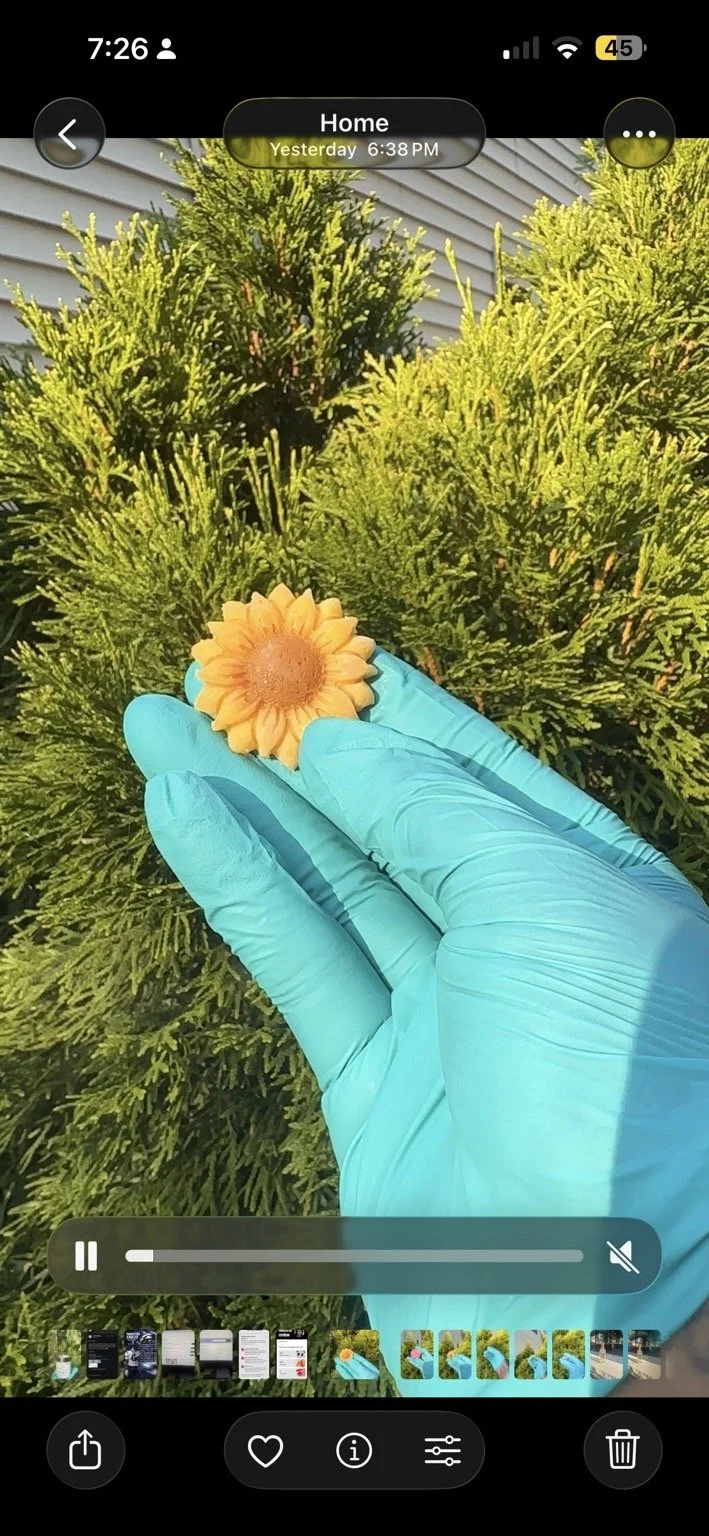
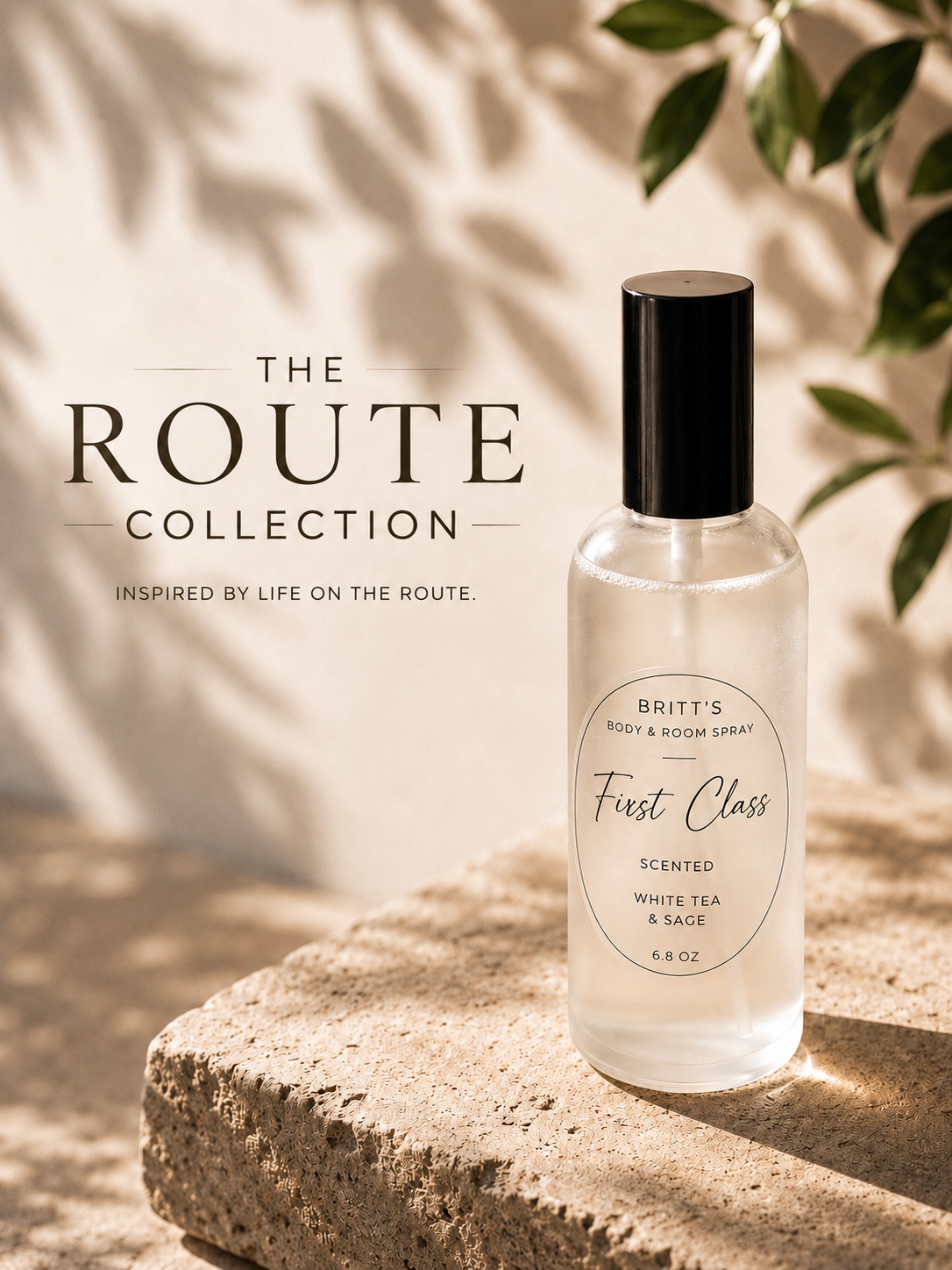
Wax melts have their own considerations. Room and body sprays require another process.
I've learned not to assume something is ready just because it looks good.
Looking beautiful and performing properly are two different things.
Sometimes testing means going back and making changes.
That can be frustrating when I'm excited to release something, but I'd rather discover a problem before my customers do.
I Learn From the Products That Don't Work
This has been a major lesson for me as a business owner.
Not everything works the first time.
I've made products where I've had to reconsider the packaging. I've learned lessons about shipping wax products in hot temperatures. I've had ideas that sounded great but needed to be adjusted once I actually started working with them.
My first large wholesale order was a perfect example.
I shipped 120 pumpkin wax melts to Texas, and the heat created a major problem when the products arrived melted. That experience taught me that preparing a product isn't only about how I make it.
I also have to think about what happens after it leaves my hands.
How will it travel?
How will it be packaged?
Could weather affect it?
Will the packaging protect it?
Those aren't always exciting questions, but they're important ones.
Naming and Packaging Bring the Product to Life
Once I know what I'm creating, I start thinking about presentation.
I love this part because this is when an idea begins to feel like a real product.
The name matters.
The label matters.
The container matters.
The photographs matter.
Even the way I describe the fragrance matters.
I want customers to understand what they're looking at and get an idea of the experience before they ever smell the product.
For me, packaging isn't only about making something pretty. It also needs to protect the product and represent my brand.
I've learned that beautiful packaging that doesn't function properly isn't good packaging.
There has to be a balance between presentation and practicality.
I Prepare My Website Before the Launch
Before introducing a product, I also have to think about where I'm sending the customer.
If I post something on social media and someone thinks, "I want that," what happens next?
They need somewhere to go.
That means preparing my website with product photographs, descriptions, pricing, scent information, and anything else customers need to make a purchasing decision.
I'm learning more and more about the importance of this step.
Getting someone's attention is one thing.
Turning that attention into a sale is another.
I don't want someone to become interested in a product and then become confused about how to purchase it.
The path between discovering the product and checking out should be as simple as possible.
Then I Start Creating Content
This is where my YouTube channel and social media platforms become an important part of the launch.
I don't only want to put up a picture and say, "New product available."
I want to tell the story.
I can show people behind the scenes while I'm creating it. I can talk about why I chose a particular fragrance. I can show the packaging. I can explain how I plan to use the product.
Sometimes I can introduce little pieces before revealing everything.
That's one of the reasons I enjoy documenting my business journey.
My audience doesn't have to only see the finished product. They can see what went into creating it.
And hopefully, that helps people understand why I'm passionate about what I make.
I Give Myself Permission to Change Things
Something I've had to learn is that launching a product doesn't mean I'm never allowed to change it.
Business is a learning process.
Customer feedback may teach me something.
Sales may teach me something.
Shipping may teach me something.
My own experience using the product may teach me something.
If I find a better way to package something, I can improve it.
If customers respond strongly to one fragrance but not another, I can pay attention.
If something simply isn't working, I don't have to keep doing it because that was my original plan.
Changing something doesn't mean the original idea failed. Sometimes it means the business is getting better.
The Final Product Is Only Part of the Story
When someone receives one of my products, I want them to know there was thought behind it.
They may not see every test.
They won't see every idea I changed.
They may never know how many times I moved a label, reconsidered a name, changed packaging, took another picture, or rewrote a description.
But I know.
And that's part of what makes building Britt's Decorative Candles so personal to me.
I'm not simply putting products on a website and hoping someone buys them.
I'm creating, testing, learning, improving, marketing, and building something of my own.
I'm still learning.
I'm still experimenting.
I'm still growing.
And every new product teaches me something that I can take into the next one.
That's the part of entrepreneurship I want to continue sharing—the work that happens before anyone ever sees the words:
“Now Available.”
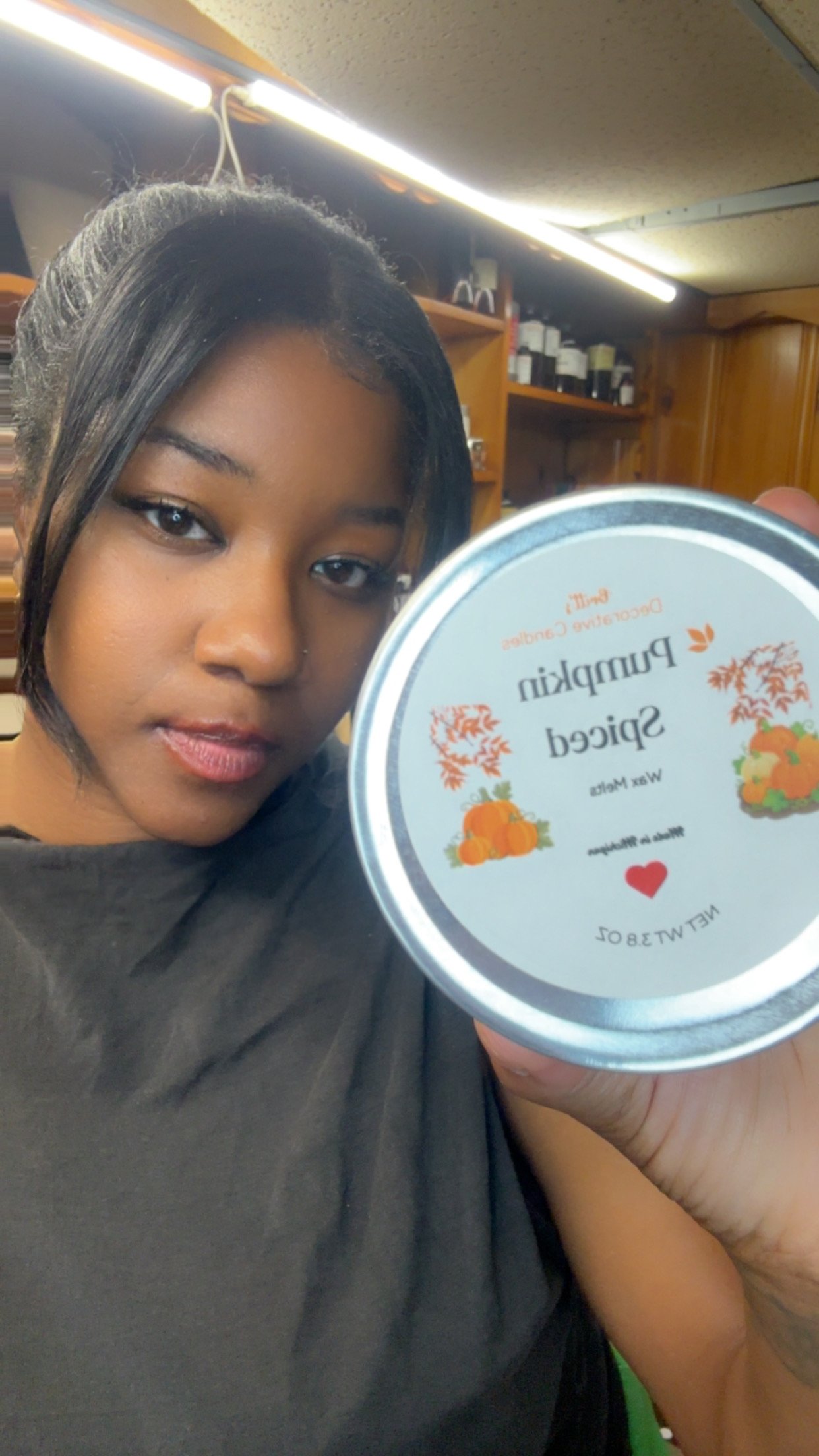
I Started With $20, a Kitchen Counter, and a Lot of Trial and Error
When people see a business online, they usually see the finished product. They see the beautiful candles, the packaging, the website, the social media posts, and the orders being packed. What they don’t always see is everything that happened before that moment.
My journey didn’t start with a huge investment, a warehouse, or thousands of customers.
I started with $20, a kitchen counter, and a lot of trial and error.
And I’m still building.
I want to share that part of my life because I know there are other people who have an idea but keep waiting until they have more money, more followers, more knowledge, or the “perfect” opportunity to begin.
Sometimes, you have to start with what you have.
Building Something From Nothing Takes Time
When I started my candle business, Britt’s Decorative Candles, I had to learn as I went. Candle making might look simple from the outside, but there is so much behind it: choosing wax, testing fragrances, finding the right wicks, designing products, creating labels, figuring out packaging, shipping orders, building a website, marketing, and learning how to actually turn attention into sales.
And then comes one of the hardest parts: getting people to know your business exists.
You can create an amazing product, but customers still have to discover you. They have to become familiar with your business, trust you, and eventually decide to spend their money with you.
That doesn't always happen after one Instagram post.
It may not happen after 10 posts.
Building a business during the first few years can require showing up over and over again, even when it feels like nobody is paying attention.
Social Media Is Part of My Everyday Business Life
One thing I’ve learned is that marketing isn't something I can do once and forget about.
I have to continue showing people what I'm doing.
That means posting on social media, showing my products, talking about my fragrances, sharing behind-the-scenes moments, explaining what makes my products different, and reminding people where they can purchase.
But there's also a difference between getting views and getting customers.
Someone might watch one of my videos today and not purchase anything. They might see another post next week. Then they might visit my website a month later. Eventually, after seeing me consistently, they may feel comfortable enough to place an order.
That's why I'm learning not to measure everything by immediate sales.
Sometimes I'm building recognition and trust first.
Why I Started Sharing My Journey on YouTube
My YouTube channel gives me another opportunity to show people more than a finished candle.
I can show them the person and the life behind the business.
My content includes my lifestyle, my children, my family moments, and the behind-the-scenes reality of building something from the ground up.
I don't want everything to look perfect because my life isn't perfect.
Sometimes I'm making products. Sometimes I'm packing an order. Sometimes I'm figuring out what went wrong. Other times, I'm simply living my everyday life with my family.
That's what I want people to see.
When somebody discovers one of my videos years from now, I want them to be able to go back and see the process.
I want them to see what it looked like before the growth happened.
I'm Documenting the Process, Not Just the Success
There is something powerful about documenting your life while you're still working toward the goal.
It's easy to tell your story after you've succeeded.
It's different to say, “I'm not there yet. Come watch me build it.”
That's what I want my YouTube channel and my business content to represent.
I'm learning about marketing.
I'm learning how to convert viewers into customers.
I'm learning what products people respond to.
I'm learning how to improve my website.
I'm learning from mistakes.
And I'm learning that running a business requires patience.
There will be posts that don't perform well. There will be videos that don't get many views. There may be days when nobody places an order.
But one quiet day doesn't determine where the business will be three years from now.
Trust Is Built by Showing Up
One of the biggest things I want to build isn't just a customer list.
I want to build trust.
I want someone who discovers my business to be able to see that I'm a real person behind these products.
They can see me creating.
They can see my family.
They can see my personality.
They can see the wins, but they can also see the learning process.
That matters because people have countless businesses competing for their attention online. I can't control whether someone buys from me today, but I can control whether I continue showing up.
Every post becomes another piece of my story.
Every video becomes documentation.
Every customer becomes part of the journey.
I'm Still Building
I don't want to write this story as though I've already reached the finish line, because I haven't.
I'm still in the middle of it.
I'm still growing my business. I'm still growing my YouTube channel. I'm still learning how to market better, reach new people, convert followers into customers, and create a community that genuinely wants to follow my journey.
And that's exactly why I'm documenting it now.
I started with $20 and a kitchen counter.
I didn't start with everything figured out.
I simply started.
So if you're reading this while sitting on an idea because you don't have thousands of dollars, a huge social media following, or every detail worked out, remember this:
Starting small doesn't mean you're thinking small.
Sometimes the beginning isn't supposed to look impressive.
Sometimes it's just supposed to be the beginning.
And years from now, I want to be able to look back at these blogs and my YouTube videos and say:
“That's where it started. That's what it looked like before everything changed.”
what my first wholesale candle order taught me about shipping wax melts in summer heat
https://brittsdecorativecandles.faire.com
Getting my first wholesale order was one of those business moments I had been waiting for.
As the owner of Britt’s Decorative Candles, I had spent a lot of time creating products, testing fragrances, improving packaging, taking product photos, reaching out to businesses, and working toward getting my products in front of more customers. So when I received my first wholesale order through Faire, I was excited.
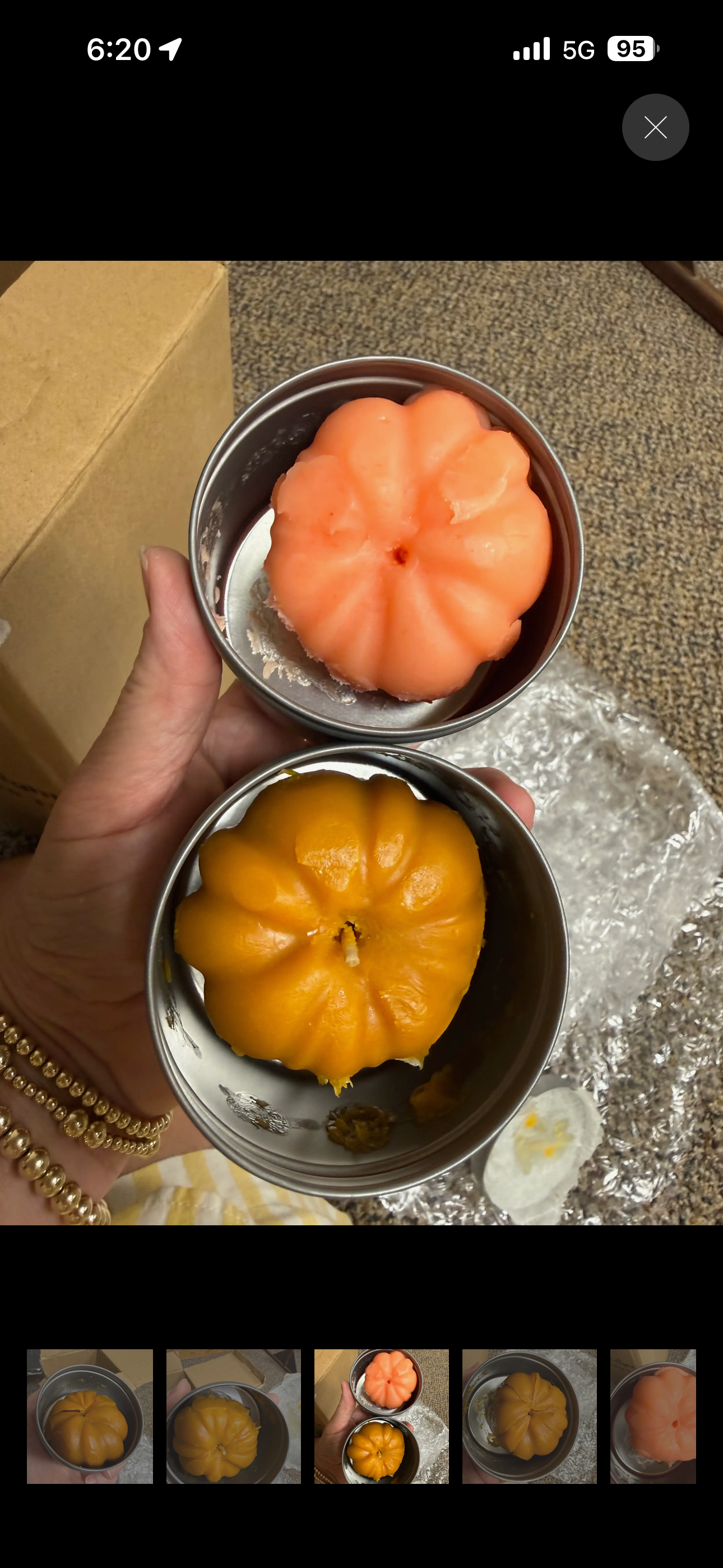
The order was for 120 pumpkin-shaped wax melts.
It was a big opportunity for my small business, and I wanted everything to be perfect.
What I didn’t expect was that this order would also teach me one of my biggest lessons so far about shipping wax products during the summer—especially when the destination is somewhere as hot as Texas.
Preparing 120 Pumpkin Wax Melts
This wasn’t a small order that I could put together in a few minutes.
I had to make 120 individual pumpkin wax melts, prepare them for shipping, package them carefully, and make sure the order was ready by the required shipping deadline.
The pumpkins were made in different shades of orange, which actually gave the collection a beautiful fall look. I was proud of how they turned out.
Each pumpkin was placed inside a silver tin. I thought the tins would give the wax melts additional protection during shipping and create a nice presentation when the customer opened the order.
I also knew that summer temperatures were going to be a concern.
The package was traveling to Roscoe, Texas, where temperatures were in the 90s.
Because wax softens and melts when exposed to heat, I knew I couldn’t package this order the same way I would package a product shipping during cooler weather.
How I Originally Packaged the Order
I tried to protect the wax melts as much as possible.
I used multiple shipping materials, including bubble wrap, foam, plastic wrap, cardboard dividers, packing peanuts, honeycomb packing paper, and cold gel packs.
My goal was simple: keep the products secure, prevent them from moving around, and give them as much protection from the summer heat as possible.
When the package left me, I felt confident that I had done everything I could.
Unfortunately, Texas heat taught me otherwise.
When I Learned the Wax Melts Had Melted
The customer contacted me after receiving the shipment and let me know that some of the pumpkin wax melts had melted during transportation.
As a business owner, that is not the type of message you want to receive.
My first thought was immediately about the customer.
I wanted her to receive the products the way I intended them to look. These weren't just pieces of wax to me. I had spent hours creating the pumpkins, preparing the colors, packaging everything, and making sure the fragrance smelled great.
The good news was that the customer told me that the products smelled amazing and that she believed her customers would enjoy them.
That meant a lot to me.
She also gave me constructive feedback about the packaging. One important suggestion was reconsidering the silver tins for hot-weather shipments because metal can hold and transfer heat.
Instead of becoming defensive about the situation, I listened.
That feedback changed the way I looked at shipping.
Packaging Is Part of the Product
One of the biggest things I learned from this experience is that packaging isn't just about making something look pretty.
Packaging is part of product performance.
When you're selling candles or wax melts, you have to think about what happens to your product after it leaves your hands.
How long will it be sitting inside a delivery truck?
Will the package sit outside on a porch?
What temperature will it experience during transit?
What materials inside the package will absorb or transfer heat?
Those are things I think about much differently now.
A package traveling through Michigan in October has completely different needs from a package traveling through Texas in August.
Customer Feedback Can Help You Improve
Another lesson I learned was not to be afraid of constructive feedback.
When you're building a business, you want customers to be happy. When something doesn't go according to plan, it can be disappointing.
But feedback can also show you exactly where your business needs to improve.
My customer could have simply complained about the melted wax melts. Instead, she explained what happened, told me how much she loved the fragrance, and offered suggestions that could help me prevent the same problem in the future.
I appreciated that.
It turned a stressful experience into a learning experience.
My priority became finding a solution and making sure she received replacement products in good condition.
What I'll Do Differently Going Forward
This experience completely changed how I plan to approach summer shipping.
For extremely hot destinations, I now know that I need to think beyond ordinary packing materials.
That can mean using more temperature-conscious packaging, reducing materials that may retain heat, limiting the amount of time a package spends in transit, shipping earlier in the week when possible, and closely watching the weather at the destination.
I'm also learning that wax products sometimes require different packaging depending on the season.
There may never be a completely heat-proof way to ship wax during extreme temperatures, but there are definitely ways to reduce the risk.
And as my business grows, that's exactly what I plan to continue doing—testing, improving, learning, and adapting.
My First Wholesale Order Was Still a Win
Would I have preferred for all 120 pumpkin wax melts to arrive perfectly?
Absolutely.
But I don't consider my first wholesale order a failure.
I consider it part of becoming a better business owner.
I completed a large order. I learned more about production. I learned more about wholesale customers. I learned about shipping wax products across the country. Most importantly, I learned how important it is to respond professionally when something goes wrong.
Business growth isn't always going to look perfect.
Sometimes growth looks like celebrating your first big order.
Other times, growth looks like opening a customer message, realizing something went wrong, fixing the problem, and making sure you don't repeat the same mistake.
My first wholesale order taught me that creating a great product is only the beginning.
You also have to make sure that product can survive the journey to the customer.
And that's a lesson I'll carry with me through every future order I ship from Britt’s Decorative Candles.
How I Got My First Wholesale Order on Faire as a Small Candle Business Owner
https://brittsdecorativecandles.faire.com
Getting my first wholesale order on Faire was one of those moments that made me realize my business was moving into a new chapter.
When I started Britt’s Decorative Candles, I knew I wanted to eventually grow beyond individual retail sales. I wanted my candles, wax melts, and other products to be carried by boutiques, gift shops, salons, and other businesses.
Wholesale felt like the next step.
But like many small business owners, I didn't know exactly when that first opportunity would happen.
Then I joined Faire.
Not long after being accepted onto the platform, I received my first wholesale order—and it was much bigger than I expected.
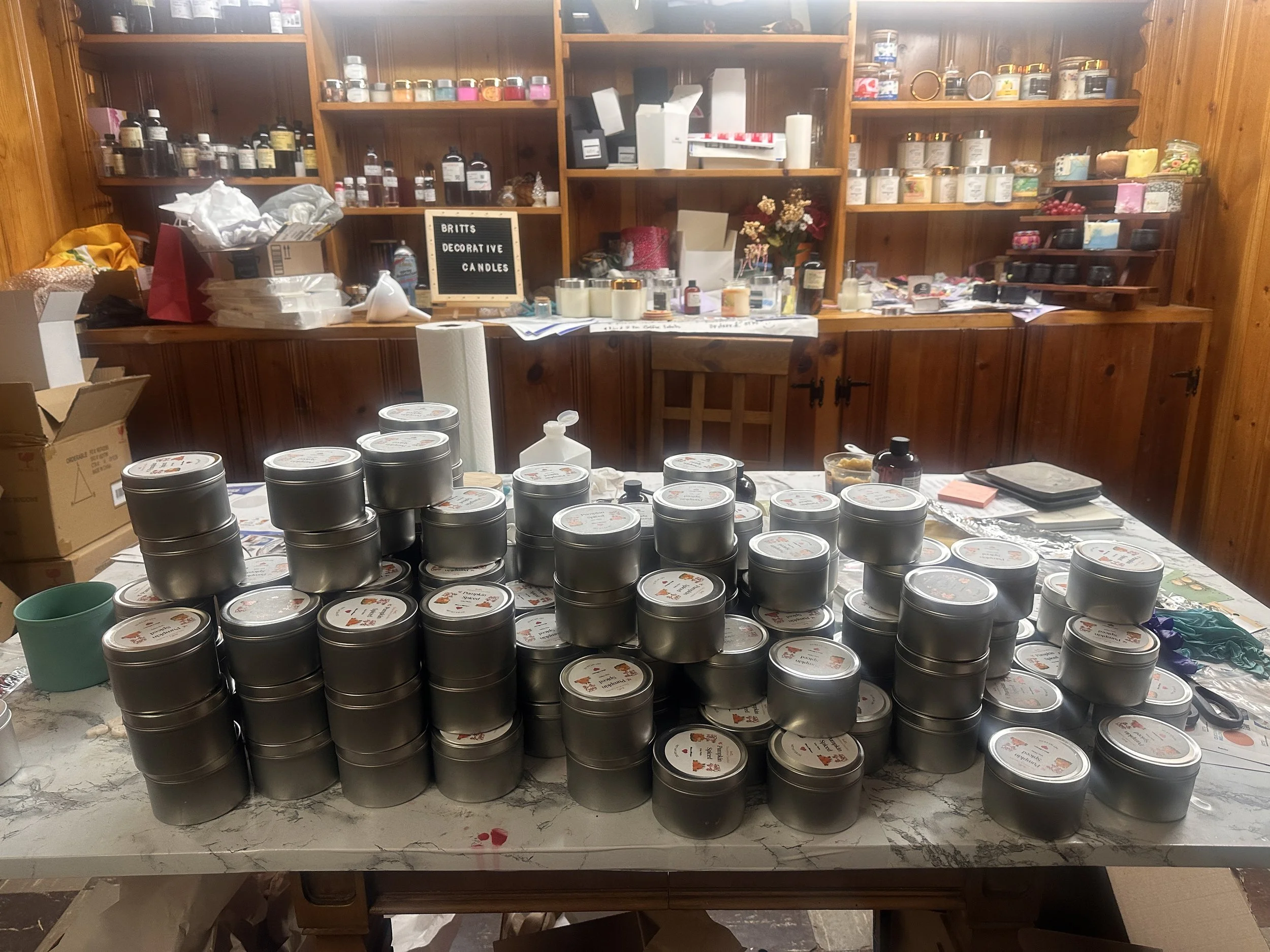
My first Faire customer ordered 120 pumpkin-shaped wax melts.
I was excited, nervous, grateful, and immediately ready to get to work.
Why I Decided to Try Faire
Before joining Faire, I had already been working on different ways to get my products in front of businesses.
I had contacted flower shops, salons, spas, boutiques, bookstores, and other businesses to introduce Britt’s Decorative Candles and talk about wholesale opportunities.
Some businesses took my information. Others told me to email them. Some conversations didn't lead anywhere right away.
That's part of being a small business owner.
You have to keep putting your name out there even when you don't immediately see the results.
Faire interested me because it gave independent brands like mine an opportunity to connect with retailers that were already looking for products to carry in their stores.
Instead of only reaching out to businesses one by one, I could create a wholesale storefront where retailers could discover my products.
Getting accepted onto the platform felt like progress.
But getting that first order made it real.
Seeing My First Wholesale Order
When I saw that someone had actually placed a wholesale order, I was incredibly excited.
Then I saw the quantity.
120 pumpkin wax melts.
This wasn't someone purchasing one or two items.
A business owner was trusting me to create products that she planned to offer to her own customers.
That made the order feel completely different from a regular retail sale.
There was a responsibility attached to it.
The products had to look good.
They had to smell good.
They needed to be packaged professionally.
Most importantly, I needed to complete the order by the required shipping deadline.
I immediately started planning what supplies I would need.
Preparing for a Larger Production Run
One of the first things I learned was how different wholesale production can be from making a few products at a time.
Making 120 wax melts requires organization.
I had to make sure I had enough wax, fragrance oil, dye, packaging, tins, and other supplies to complete the order.
I also had to think about consistency.
The order was for pumpkin-shaped wax melts, and I wanted them to have that beautiful fall appearance.
During production, some of the pumpkins came out in different shades of orange.
Some were brighter, while others were deeper or softer shades.
I actually liked the variation because it reminded me of real pumpkins during the fall season.
At the same time, the experience taught me something important about wholesale.
When a retailer orders a large quantity of one product, consistency matters.
Now I understand that using the same dye and process throughout an entire wholesale batch can help create a more uniform product.
That's one of the many lessons I wouldn't have learned the same way without actually completing a larger order.
Managing the Deadline
Another major part of my first Faire order was learning how important production deadlines are.
With a retail customer, you may have more flexibility depending on your shipping policy.
Wholesale is different.
The retailer may be purchasing your products for an event, a seasonal launch, customer gifts, or inventory they need by a specific date.
That means your production schedule isn't only affecting your business.
It's affecting theirs too.
I had to pay close attention to when my supplies would arrive and how quickly I could complete production.
There were moments when I was waiting for additional materials and trying to make sure everything came together in time.
It taught me to think ahead about inventory.
As I continue growing my wholesale business, I want to keep more of my essential supplies available so I'm better prepared when larger orders arrive.
The Excitement of Shipping It Out
After all the pouring, preparing, packing, and organizing, there was something special about finally seeing those boxes ready to leave.
I had created 120 products for a retailer in another state.
That was a milestone.
I printed the shipping labels, packed the order, and shipped it through FedEx to Texas.
For me, it represented more than shipping wax melts.
It represented the idea that something I created at home could travel to another state, enter another business, and potentially be purchased and enjoyed by customers I had never met.
That's one of the things I love about entrepreneurship.
Your business can begin very small, but your products can eventually travel much farther than you ever expected.
What Happened After Shipping
My first wholesale experience wasn't perfect.
The order was traveling to Texas during extremely hot summer weather, and some of the wax melts were affected by the heat during shipping.
That experience became an entirely separate business lesson for me about hot-weather packaging, shipping materials, and preparing wax products for southern temperatures.
But something important also happened.
The retailer told me that the fragrance smelled amazing and that she believed her customers would enjoy the products.
She also gave me constructive feedback about the packaging.
Instead of looking at that situation as the end of the experience, I looked at it as information I could use to improve.
That's what business ownership has taught me.
You celebrate the wins, but you also learn from the problems.
What My First Faire Order Taught Me
My first Faire order taught me more than I expected.
It taught me about production planning.
It taught me about inventory.
It taught me about consistency.
It taught me about wholesale customer expectations.
It taught me about shipping deadlines.
And it taught me how important communication is when something doesn't go exactly according to plan.
But most importantly, it gave me confidence.
Someone saw my products on Faire and decided they were worth bringing into their business.
That matters.
Just the Beginning
Getting my first wholesale order didn't mean I had figured everything out.
I'm still learning.
I'm still improving my products, refining my packaging, reaching out to new businesses, and discovering better ways to operate as I grow.
But I will always remember that first order.
120 pumpkin wax melts headed from my small business in Michigan to a retailer in Texas.
It reminded me that every email, product photo, listing, test batch, and business decision can eventually lead to an opportunity.
For anyone building a small product-based business and wondering whether wholesale is possible, my experience has taught me one thing:
You don't have to have everything figured out before you start.
You just have to be willing to learn when the opportunity arrives.
My first Faire order was not a perfect experience—but it was an important one.
And for Britt’s Decorative Candles, it was only the beginning.
How I Created a Candle Collection That Gives Back to Michigan Humane
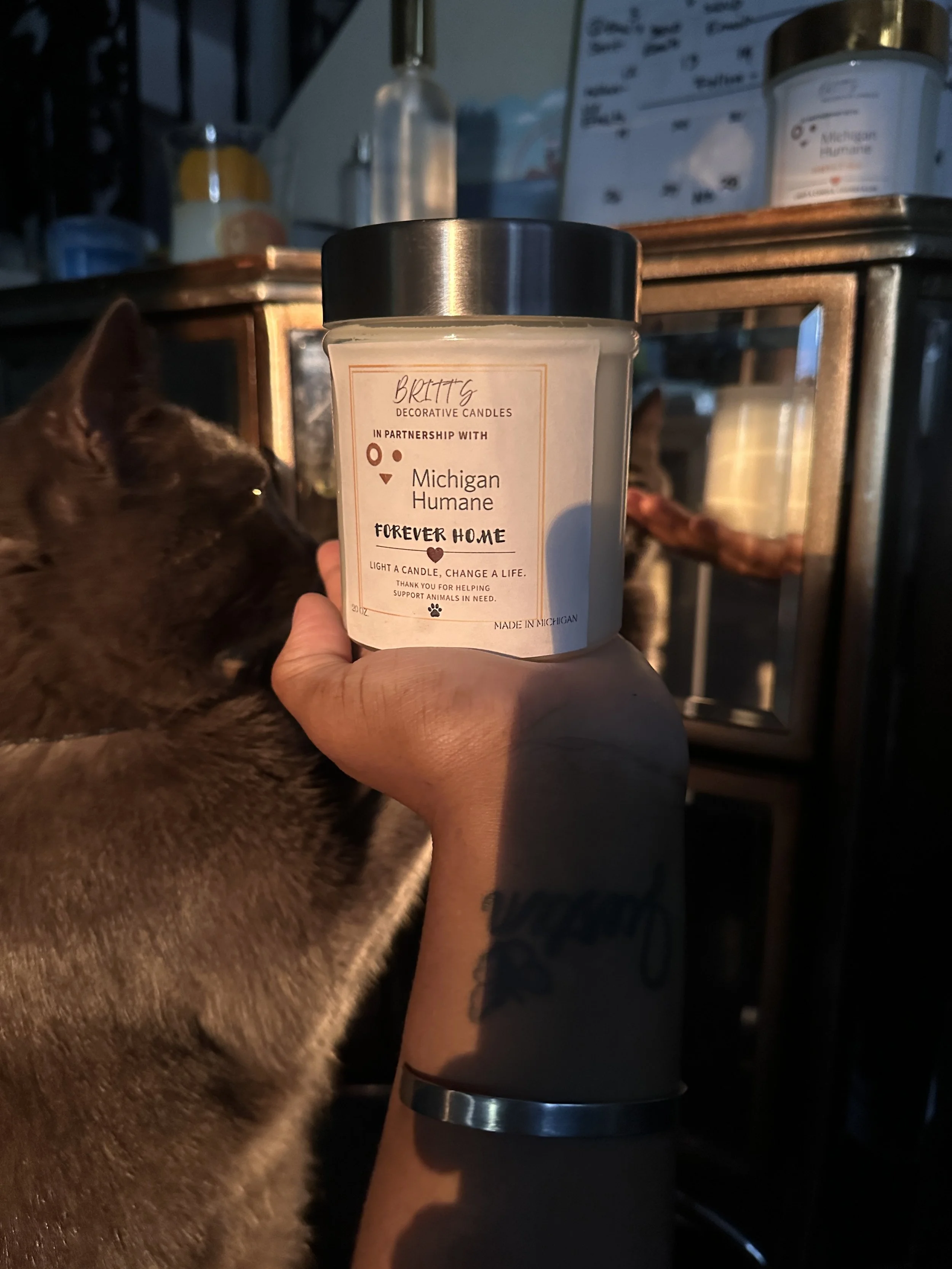
Grayson Loves Candles!
When I started Britt’s Decorative Candles, I knew I wanted my business to become more than just a place where people could purchase candles.
Of course, I wanted to create beautiful products that smelled amazing and made people feel comfortable in their homes. But as my business continued to grow, I also started thinking about how I could use my products to support something meaningful.
As an animal lover, supporting animals and helping them find safe, loving homes felt like a natural direction for me.
That idea eventually led me to create a special candle collection connected to Michigan Humane.
Wanting My Business to Give Back
Building a small business involves constantly thinking about products, supplies, packaging, marketing, customers, shipping, and sales.
But I also believe a business can have a purpose beyond making money.
I wanted Britt’s Decorative Candles to be connected to something positive in my community. Instead of simply creating another seasonal collection, I wanted to create products that could tell a story and help support a cause at the same time.
Michigan Humane immediately stood out to me.
Their work helping animals, connecting pets with families, and supporting animal welfare throughout Michigan aligned with something I personally cared about.
Once I decided that this was something I wanted to pursue, I reached out and began the process of discussing the idea.
Eventually, I received approval to move forward with the collection.
That moment made the idea feel real.
Now I needed to create candles that represented not only my business but also the emotional connection people have with their pets.
Creating a Collection With Meaning
I didn't want these candles to feel like ordinary products with a charity name attached to them.
I wanted the fragrances and names to create an emotional experience.
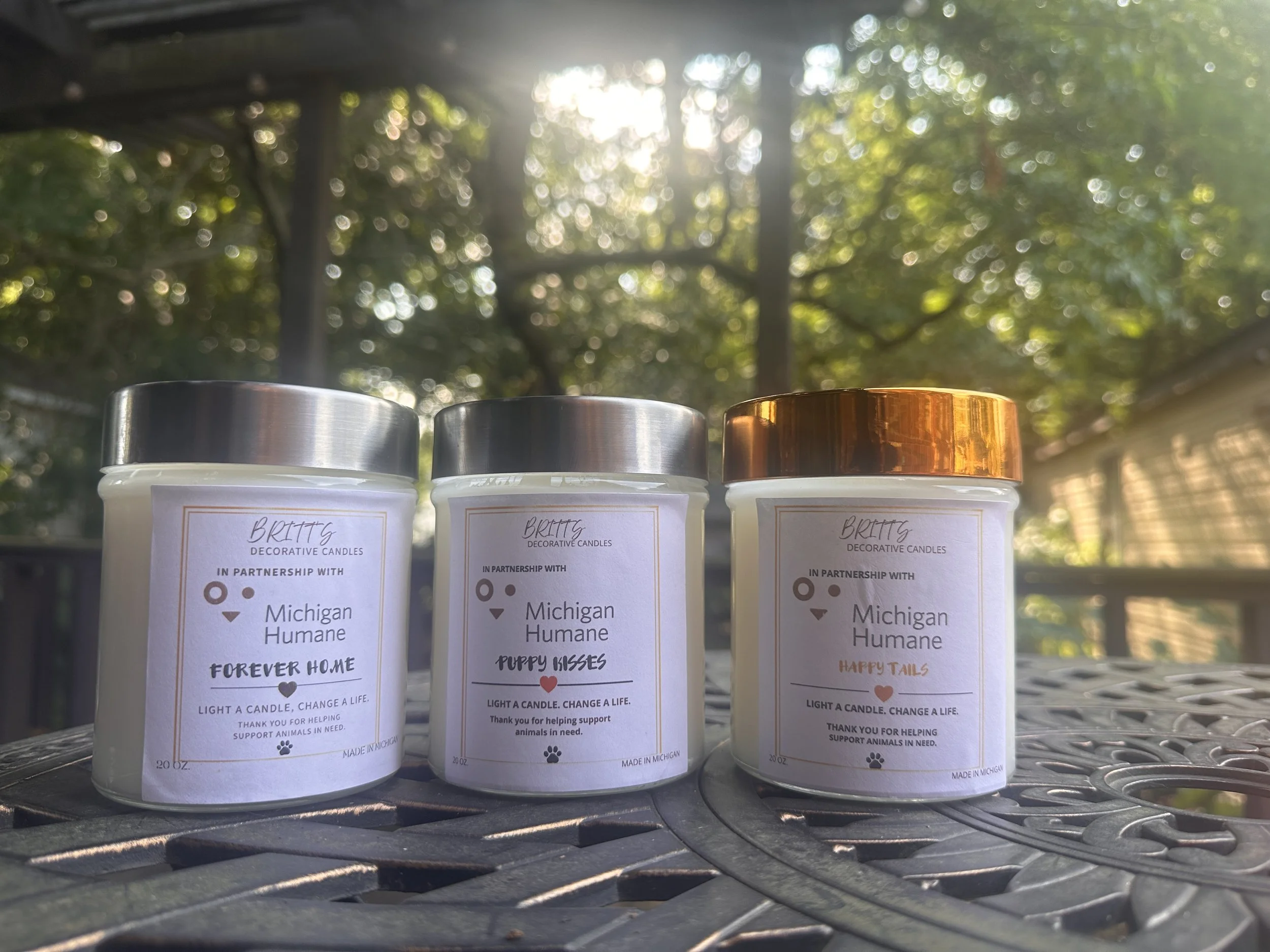
One of the candles became Forever Home.
The name immediately made me think about the moment when an animal finally finds a family and a place where they can feel safe.
For the fragrance, I chose Autumn & Apple Orchard.
It has the type of warm, welcoming scent that reminds me of fall, home, comfort, apples, and those peaceful moments when you're inside enjoying the season.
The idea behind Forever Home wasn't simply to sell a fall candle.
I wanted someone to light it and think about what home really means.
For a rescued animal, finding a forever home can mean safety, warmth, love, food, comfort, and finally having a place where they belong.
That made the name especially meaningful to me.
Creating Puppy Kisses
The second candle in the collection became Puppy Kisses.
Anyone who loves dogs understands that name immediately.
There's something about the excitement and affection animals give us that can completely change the mood of a day.
For Puppy Kisses, I wanted something refreshing, peaceful, and comforting.
The fragrance combines Lavender Driftwood with Eucalyptus Spearmint.
I wanted this candle to have a clean, relaxing feeling while still being memorable.
The two candles have different personalities.
Forever Home feels warm, cozy, and comforting.
Puppy Kisses feels fresh, calm, and uplifting.
Together, they represent different emotions that I associate with having animals in our lives.
Designing the Collection
The visual presentation was also important to me.
Because this collection represents both Britt’s Decorative Candles and Michigan Humane, I wanted the packaging to feel professional while still communicating the purpose behind the products.
I decided that the labels would include both brands so customers would immediately understand that this was a special collaboration.
I also wanted the imagery surrounding the collection to tell the story.
For Forever Home, I imagined warm autumn colors, apples, cinnamon, fall leaves, and animals relaxing in a comfortable home.
For Puppy Kisses, I pictured lavender, eucalyptus, dogs, cats, and softer elements that communicated peace and affection.
Those details matter because customers aren't only purchasing fragrance.
They're purchasing the feeling and story connected to the product.
Why Transparency Matters to Me
Another important part of creating a fundraising collection is transparency.
When customers purchase a product because they know a portion supports an organization, I believe they should understand where that support is going.
My goal is to make the Michigan Humane Collection something customers can feel good about purchasing.
I want people to know that when they purchase one of these candles, they're supporting my small business while also helping me contribute to an organization doing important work for animals.
As the collection grows, I want to continue sharing information about the impact and donations connected to it.
For me, that accountability is part of building trust with customers.
What This Collection Means for My Business
Creating the Michigan Humane Collection has taught me something important about entrepreneurship.
Sometimes the best business ideas don't begin with asking, "What can I sell?"
They begin with asking, "What do I care about?"
When you connect your products to something you genuinely believe in, the marketing becomes more meaningful because there is a real story behind it.
Forever Home isn't simply another autumn candle.
Puppy Kisses isn't simply another fragrance.
They represent a larger purpose.
They remind me that even as a small business, I can find ways to contribute to something bigger than myself.
Combining Business With Purpose
I'm still growing Britt’s Decorative Candles.
I'm still learning, experimenting, improving my products, reaching new customers, and figuring out what works best for my business.
But this collection represents the type of company I hope to continue building.
I want people to enjoy my candles because they smell wonderful and make their homes feel good.
But I also want customers to know there is a person, a story, and a purpose behind what they're purchasing.
The Michigan Humane Collection allows me to combine my love for creating candles with my love for animals.
And that makes this collection especially important to me.
My hope is that when someone lights Forever Home or Puppy Kisses, they enjoy the fragrance—but they also remember the animals that are still waiting for their own forever homes.
Sometimes one candle can create a beautiful atmosphere.
And sometimes, it can also help support something that truly matters.
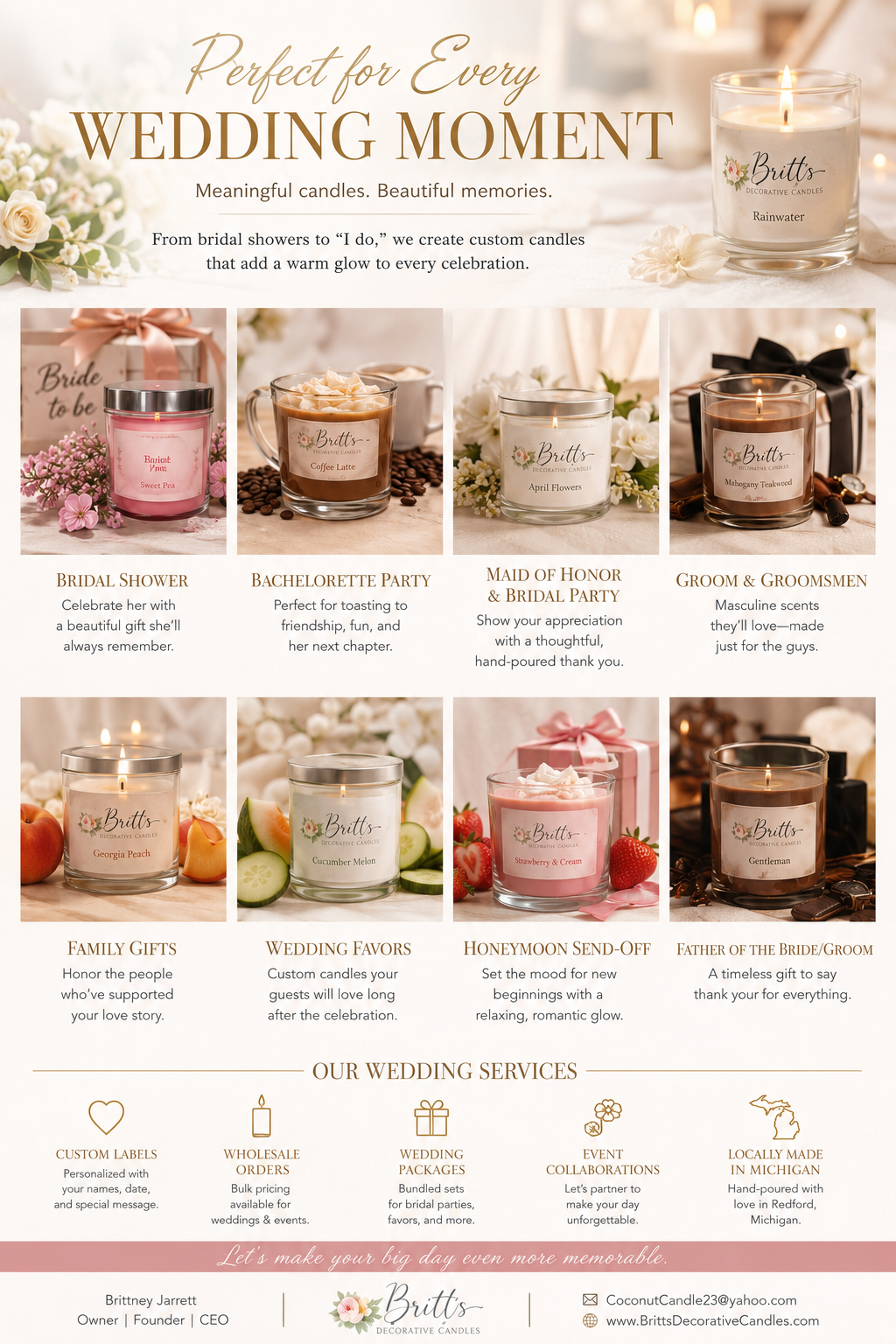
Wedding Candles & Bridal Shower Favors: Create Unforgettable Moments with Custom Candles from Britt’s Decorative Candles
A wedding is more than a single day—it's the beginning of a lifetime of memories. From the excitement of saying "Yes!" to the bridal shower, rehearsal dinner, wedding ceremony, and reception, every celebration deserves thoughtful details that reflect your unique love story.
At Britt's Decorative Candles, we believe every celebration should feel personal, elegant, and unforgettable. That's why we specialize in handcrafted candles that become meaningful keepsakes for couples, bridal parties, family members, and guests. Whether you're planning an intimate gathering or a grand celebration, our custom candle collections are designed to add warmth, beauty, and a lasting impression to your special day.
More Than Wedding Favors—A Lasting Memory
Wedding favors are a beautiful way to thank the people who have supported your journey. While many favors are enjoyed for a moment and forgotten, a handcrafted candle continues to bring joy long after the celebration is over.
Every time your guests light their candle, they'll remember your wedding day, the love you shared, and the unforgettable moments they experienced with you.
A personalized candle is more than a gift—it's a memory that lives on.
Custom Private Label Wedding Candles
Your wedding should reflect your personality and style, and your favors should be just as unique.
Our private label service allows you to personalize your candles with details such as:
Your names
Wedding date
Monogram or initials
A favorite quote
A meaningful Bible verse
Wedding colors
Floral artwork
Custom illustrations
Venue-inspired designs
Thank-you messages
Whether your wedding style is classic, modern, rustic, boho, glamorous, minimalist, or timeless, we'll create candle labels that complement your vision.
Bridal Shower Candle Favors
Bridal showers are filled with laughter, love, and celebration. They're also the perfect opportunity to give your guests something beautiful to remember the occasion.
Custom bridal shower candles make wonderful favors for:
Friends
Bridesmaids
Mothers
Grandmothers
Sisters
Aunts
Cousins
Bridal shower guests
Each candle can be personalized with the bride's name, shower date, event theme, or a heartfelt message of appreciation.
These elegant keepsakes become a lasting reminder of a joyful celebration shared with loved ones.
Bridesmaid Proposal & Thank-You Gifts
Your bridal party plays an important role in your wedding journey.
Whether you're asking your closest friends to stand beside you or thanking them after the celebration, personalized candles make thoughtful and meaningful gifts.
Imagine presenting each bridesmaid with a candle featuring her name, a beautiful fragrance, and a heartfelt message like:
Thank You for Standing by My Side
Bridesmaid
Maid of Honor
Forever Friends
Love, Laughter & Happily Ever After
These gifts become treasured reminders of a friendship that extends beyond the wedding day.
Gifts for Parents and Family Members
Weddings celebrate not only the couple but also the families who helped shape their lives.
Custom candles make beautiful gifts for:
Parents of the bride
Parents of the groom
Grandparents
Godparents
Siblings
Flower girls
Ring bearers
Officiants
Wedding coordinators
Personalized labels expressing gratitude create meaningful keepsakes that honor the people who helped make the day possible.
Welcome Gifts for Out-of-Town Guests
Many couples welcome family and friends traveling from across the country to celebrate with them.
Adding a handcrafted candle to a welcome bag instantly creates a warm and luxurious experience.
Pair your candle with local treats, bottled water, an itinerary, and a personalized welcome note to create a gift your guests will truly appreciate.
Wedding Reception Favors
Reception favors are one final opportunity to thank your guests.
Our candles can be displayed beautifully at each place setting or arranged on a dedicated favor table where guests can choose their favorite fragrance.
Popular personalization ideas include:
Thank You for Celebrating With Us
Forever Begins Today
Better Together
Our Forever Starts Here
Love Always Wins
A Perfect Match
Happily Ever After
These thoughtful details elevate your reception and leave guests with something they'll enjoy long after the music ends.
Candles for Every Wedding Event
We offer custom candles for every stage of your celebration, including:
Engagement parties
Bridal showers
Couples' showers
Bachelor and bachelorette celebrations
Rehearsal dinners
Welcome parties
Wedding ceremonies
Reception favors
Farewell brunches
Anniversary celebrations
Vow renewals
No matter the occasion, we can create candles that fit your theme and vision.
Luxury Handcrafted Quality
Each candle from Britt's Decorative Candles is handcrafted with premium coconut wax and carefully selected fragrance oils for a clean, luxurious burn.
Our commitment to quality means every candle is created with attention to detail—from the vessel and label to the fragrance and packaging.
We believe your guests deserve a gift that's as beautiful as the celebration itself.
A Personalized Experience for Every Couple
Every wedding is unique, which is why we work closely with couples to create custom designs that reflect their style and personality.
Whether you're planning an elegant ballroom reception, a romantic garden ceremony, a destination wedding, or a cozy backyard celebration, we can help create candles that complement your décor and leave a lasting impression.
We love collaborating with wedding planners, event designers, florists, venues, photographers, and other vendors to ensure every detail feels cohesive and memorable.
Wholesale Partnerships for Wedding Professionals
In addition to serving couples directly, Britt's Decorative Candles proudly partners with:
Wedding planners
Bridal boutiques
Wedding venues
Event planners
Florists
Gift shops
Hotels
Bridal expos
Wedding coordinators
Corporate event planners
Our wholesale and private label services allow businesses to offer beautifully branded candles that enhance their client experience while reflecting their own style and identity.
Let's Create Something Beautiful Together
Your wedding deserves details that guests will remember long after the last dance.
Whether you're looking for elegant bridal shower favors, personalized wedding candles, welcome gifts, bridesmaid gifts, family appreciation gifts, or custom private label collections, Britt's Decorative Candles is here to bring your vision to life.
We are honored to be part of life's most meaningful celebrations, creating handcrafted candles that reflect love, joy, gratitude, and unforgettable memories.
If you're ready to design custom candles for your wedding or bridal shower—or if you're a wedding professional interested in a wholesale or private label partnership—we would love to hear from you.
Let's create something beautiful together, one candle and one celebration at a time.
Brittney Jarrett
Founder & Owner
Britt's Decorative Candles
📧 CoconutCandle23@yahoo.com
🌐 www.BrittsDecorativeCandles.com
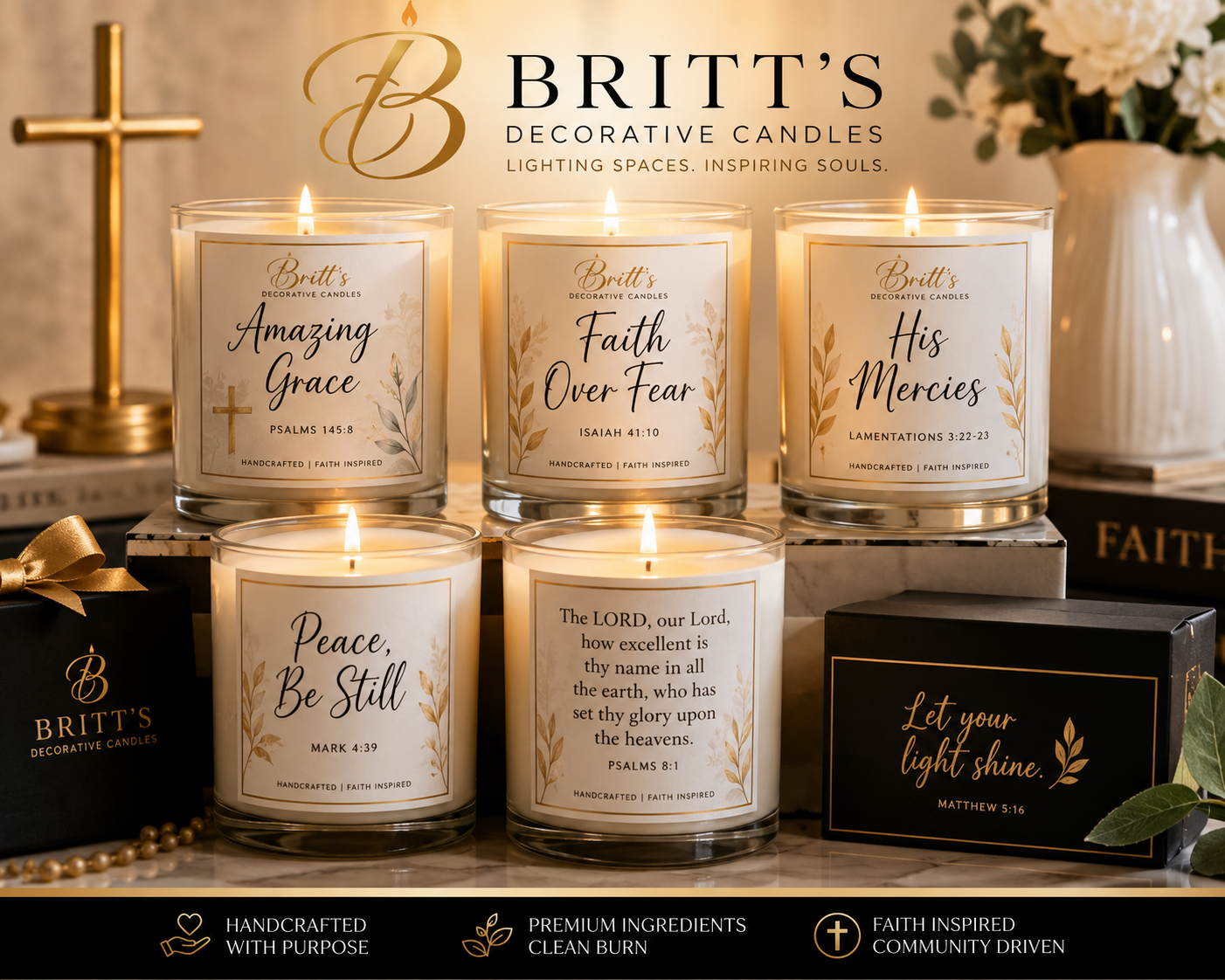
Why Church Fundraisers Are More Meaningful with Custom candles: Building Community Through Faith, Partnership, and Purpose.
Churches are more than places of worship—they are places where families gather, communities grow, and lives are transformed. Every ministry, outreach program, youth event, mission trip, and community initiative is made possible through the generosity and support of faithful members and local partners.
At Britt's Decorative Candles, we believe fundraising should do more than raise money. It should bring people together, strengthen relationships, and leave a lasting reminder of God's love. That's why we proudly partner with churches to create beautiful, handcrafted candle collections that help support ministries while offering meaningful gifts that people genuinely enjoy.
Whether your church is raising funds for a building project, supporting missions, celebrating an anniversary, or thanking volunteers, we would be honored to help bring your vision to life.
A Different Kind of Church Fundraiser
Many churches rely on bake sales, dinners, raffles, or car washes to raise funds. While those events can be successful, custom candles offer something different.
Our candles become keepsakes. Long after the fundraiser has ended, families continue enjoying them in their homes during prayer time, Bible study, quiet reflection, or family gatherings. Every time they light a candle, they're reminded of their church, their faith, and the purpose they supported.
Fundraising can become an experience that inspires people rather than simply asking for another donation.
Fundraising Programs Designed for Your Church
We work with churches of all sizes to create fundraising programs tailored to their unique mission and goals.
Some of the most popular fundraising opportunities include:
Building and renovation campaigns
Youth ministry fundraisers
Vacation Bible School programs
Mission trips
Women's Ministry events
Men's Ministry conferences
Community outreach programs
Food pantry initiatives
Scholarship funds
Holiday giving campaigns
Anniversary celebrations
Community service projects
Each fundraiser can feature custom candle labels designed specifically for your church.
Custom Private Label Church Candles
One of our favorite services is creating private label candles exclusively for churches.
Imagine candles featuring your church's name, logo, anniversary theme, favorite Scripture, or ministry message. These personalized candles become meaningful gifts while also serving as wonderful keepsakes for members and visitors.
Popular faith-inspired candle collections include:
Amazing Grace
Faith Over Fear
His Mercies
Peace, Be Still
Blessed & Highly Favored
Joy Comes in the Morning
Grace Upon Grace
The Lord Is My Shepherd
Walk by Faith
Light of the World
Churches can even create limited-edition seasonal collections throughout the year.
Welcome Gifts for First-Time Visitors
First impressions matter.
A beautifully packaged candle can be a thoughtful way to welcome new visitors and thank them for joining your congregation.
Instead of a traditional welcome packet alone, imagine including a handcrafted candle with an encouraging Scripture or message of hope.
It's a simple gesture that creates a memorable experience and reminds visitors they are valued and appreciated.
Pastor and Staff Appreciation Gifts
Church leaders dedicate countless hours serving others.
Custom candles make elegant appreciation gifts for pastors, associate pastors, ministry leaders, administrative staff, musicians, teachers, and volunteers.
Each candle can include personalized messages, church branding, or Bible verses to celebrate the people who faithfully serve your congregation throughout the year.
Women's Ministry Collections
Women's conferences, retreats, Bible studies, brunches, and fellowship gatherings deserve gifts that feel meaningful.
We create custom candle collections designed specifically for Women's Ministry events.
These collections can feature elegant labels, uplifting Scriptures, beautiful fragrances, and personalized event branding that attendees will treasure long after the event is over.
Holiday Collections Throughout the Year
Churches celebrate many special seasons.
Our custom holiday collections can be created for:
Christmas
Easter
Mother's Day
Father's Day
Thanksgiving
Advent
Church anniversaries
Pastor appreciation month
Holiday candles also make wonderful gifts for volunteers, ministry leaders, donors, and community partners.
Candles for Special Church Events
Church life is filled with celebrations.
We love creating custom candles for:
Weddings
Bridal showers
Baby dedications
Baptisms
Church anniversaries
Prayer breakfasts
Leadership retreats
Community festivals
Volunteer appreciation dinners
Banquets
Conferences
Family events
Every event becomes even more memorable with personalized keepsakes guests can take home.
Partnership Opportunities Beyond Fundraising
At Britt's Decorative Candles, we view every church relationship as a partnership—not just a transaction.
We enjoy working alongside churches to develop creative ways to serve their congregation and community.
Our partnership opportunities include:
Church fundraising programs
Private label candle collections
Wholesale ordering
Seasonal collections
Event favors
Ministry appreciation gifts
Visitor welcome gifts
Volunteer recognition gifts
Community outreach events
Custom candle collaborations
We believe every partnership should reflect excellence, integrity, and purpose.
Handcrafted with Care
Every candle is handcrafted using premium coconut wax and carefully selected fragrance oils to provide a clean-burning, luxurious experience.
Our goal is to create products that reflect quality while helping churches create meaningful experiences for the people they serve.
Every candle is made with attention to detail because we understand it represents both our business and your ministry.
Let's Build Something Meaningful Together
Whether your church is planning its next fundraiser, celebrating a milestone, welcoming new members, or looking for thoughtful gifts for ministry leaders, Britt's Decorative Candles would be honored to partner with you.
Together, we can create custom candle collections that encourage generosity, strengthen community, and support the incredible work your church is already doing.
If you're interested in creating a fundraiser, designing a private label collection, placing a wholesale order, or discussing a custom collaboration, we'd love to connect.
Let's create something beautiful that reflects your church's mission while making a lasting impact in the lives of your congregation and community.
Contact Britt's Decorative Candles today to begin your custom church partnership.
Brittney Jarrett
Founder & Owner
Britt's Decorative Candles
📧 CoconutCandle23@yahoo.com
🌐 www.BrittsDecorativeCandles.com
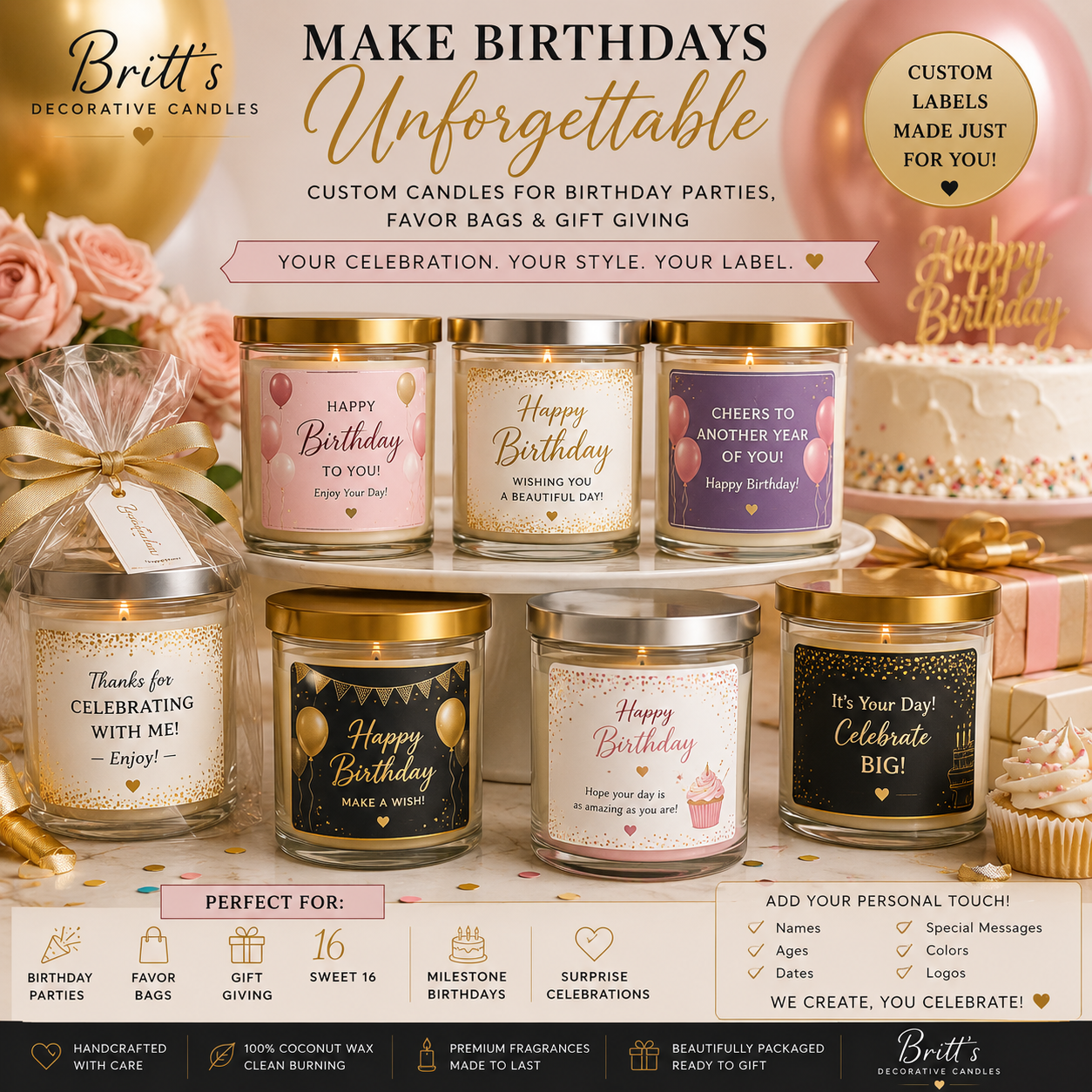
Celebrate Life’s Special Moments with Custom Birthday Candles From Britt’s Decorative Candles
Birthdays are more than just another date on the calendar—they're a celebration of life, love, milestones, and unforgettable memories. Whether you're planning a child's first birthday, a Sweet 16, a milestone birthday, or a surprise celebration for someone special, every detail helps create an experience your guests will remember.
At Britt's Decorative Candles, we believe the perfect gift doesn't have to be ordinary. Our handcrafted candles are designed to add warmth, elegance, and a personal touch to every celebration. From custom birthday party favors to personalized gift candles and private-label designs, we help transform meaningful moments into lasting memories.
A Birthday Favor Guests Will Actually Use
Let's be honest—many party favors are forgotten once the celebration ends. Imagine instead sending your guests home with a beautifully handcrafted candle they can enjoy long after the birthday cake has been cut.
Our custom birthday candles make thoughtful keepsakes that are both practical and memorable. Every time your guests light their candle, they'll remember the laughter, love, and joy they shared at your celebration.
Our birthday candles are perfect for:
Children's Birthday Parties
Adult Birthday Celebrations
Sweet 16 Parties
Quinceañeras
Milestone Birthdays
21st Birthdays
30th, 40th, 50th, and Beyond
Surprise Birthday Parties
Retirement Celebrations
Family Gatherings
Personalized Just for Your Celebration
Every birthday is unique, and your candles should be too.
At Britt's Decorative Candles, we offer custom labels designed specifically for your event. Whether you want something elegant, fun, colorful, or sophisticated, we'll work with you to create a candle that perfectly reflects your celebration.
Your personalized label can include:
The guest of honor's name
Birthday age
Event date
Special quote or message
Favorite colors
Photos or artwork (where appropriate)
Company or family logo
Thank-you message
If you already have a design in mind, we'll gladly work with your artwork to bring your vision to life.
Birthday Gifts That Feel Personal
Finding the perfect birthday gift isn't always easy. Gift cards are convenient, but personalized gifts leave a lasting impression.
Our handcrafted candles make beautiful birthday gifts for:
Parents
Grandparents
Best Friends
Teachers
Coworkers
Neighbors
Bridesmaids
Groomsmen
Spouses
Significant Others
Add a custom label with a heartfelt message, and you've created a meaningful gift they'll treasure.
Beautiful Fragrances for Every Personality
Everyone has a favorite scent, which makes candles such a thoughtful gift.
Choose from some of our customer favorites, including:
Strawberry & Cream
Coffee Latte
Sweet Pea
Georgia Peach
Rainwater
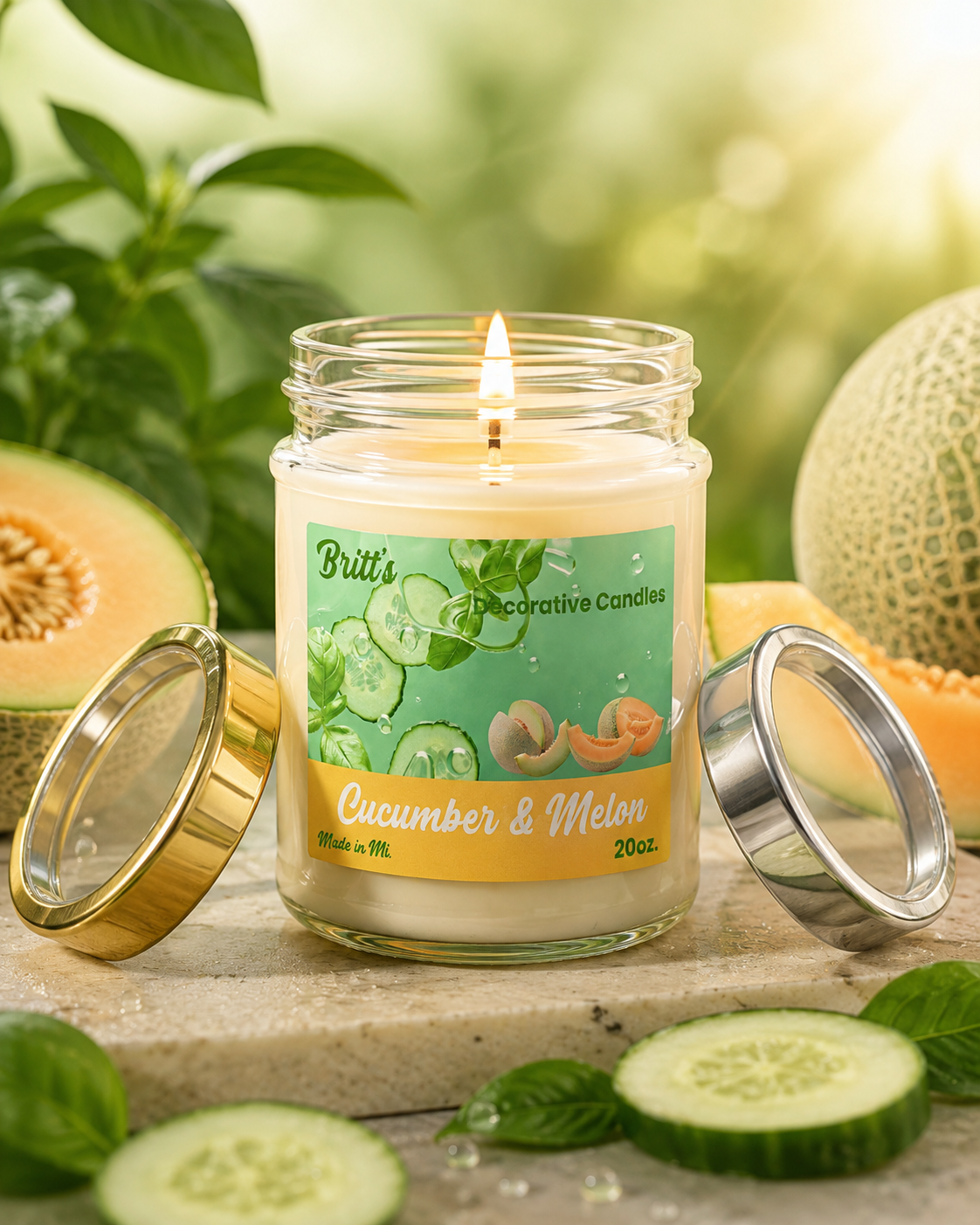
Cucumber Melon
Mahogany Oakwood
Fruity Pebble
Each candle is handcrafted with 100% premium coconut wax for a clean, luxurious burn and a fragrance experience that's perfect for celebrating life's special moments.
Custom Candles for Birthday Party Themes
Planning a themed birthday party? We can create candles to match your event décor and style.
Popular themes include:
Princess Parties
Modern Glam
Rustic Elegance
Boho Chic
Garden Parties
Tropical Celebrations
Black & Gold Luxury
Pink & Gold Birthday Themes
Minimalist Modern
Seasonal Celebrations
Our custom labels can coordinate beautifully with your invitations, table décor, balloons, party favors, and color palette for a polished, cohesive look.
Perfect for Party Favor Bags
Looking for a party favor that's elegant and memorable? Our candles fit beautifully into favor bags and gift boxes.
Pair your candle with:
Chocolates
Mini soaps
Personalized cookies
Thank-you cards
Small succulents
Bath salts
Ribbon and gift tags
It's a simple way to create a luxurious gift your guests will truly appreciate.
More Than Birthdays
While birthdays are one of our favorite celebrations, our custom candles are also perfect for:
Baby Showers
Bridal Showers
Weddings
Bachelor & Bachelorette Parties
Graduation Parties
Retirement Celebrations
Holiday Gatherings
Family Reunions
Client Appreciation Gifts
Employee Recognition
Corporate Events
No matter the occasion, we love helping our customers celebrate life's biggest moments with personalized candles that leave a lasting impression.
Handcrafted with Quality You Can Trust
Every candle from Britt's Decorative Candles is handcrafted with care using premium ingredients and attention to detail.
Our candles feature:
100% premium coconut wax
Luxury fragrance oils
Elegant glass vessels
Beautiful packaging
Premium craftsmanship
Long-lasting fragrance
Clean-burning performance
We take pride in creating products that are as beautiful to display as they are enjoyable to burn.
Make Your Celebration Unforgettable
The smallest details often make the biggest impact. A personalized candle is more than a party favor—it's a keepsake, a thank-you gift, and a reminder of a joyful celebration shared with family and friends.
Whether you're hosting an intimate dinner or a large birthday celebration, Britt's Decorative Candles can help bring your vision to life with custom labels, elegant designs, and handcrafted quality that your guests will remember.
From the first consultation to the finished candle, we're here to make your special day even more memorable.
Let's Celebrate Together
If you're planning a birthday party and want personalized candles for party favors, gift giving, or custom event décor, we'd love to create something just for you.
Whether you need a handful of candles for a family gathering or a large order for a milestone celebration, Britt's Decorative Candles is ready to help make your birthday unforgettable.
Brittney Jarrett
Founder & CEO
Britt's Decorative Candles
📧 CoconutCandle23@yahoo.com
🌐 www.BrittsDecorativeCandles.com
Create lasting memories with handcrafted candles made just for your celebration—because every birthday deserves a personal touch.
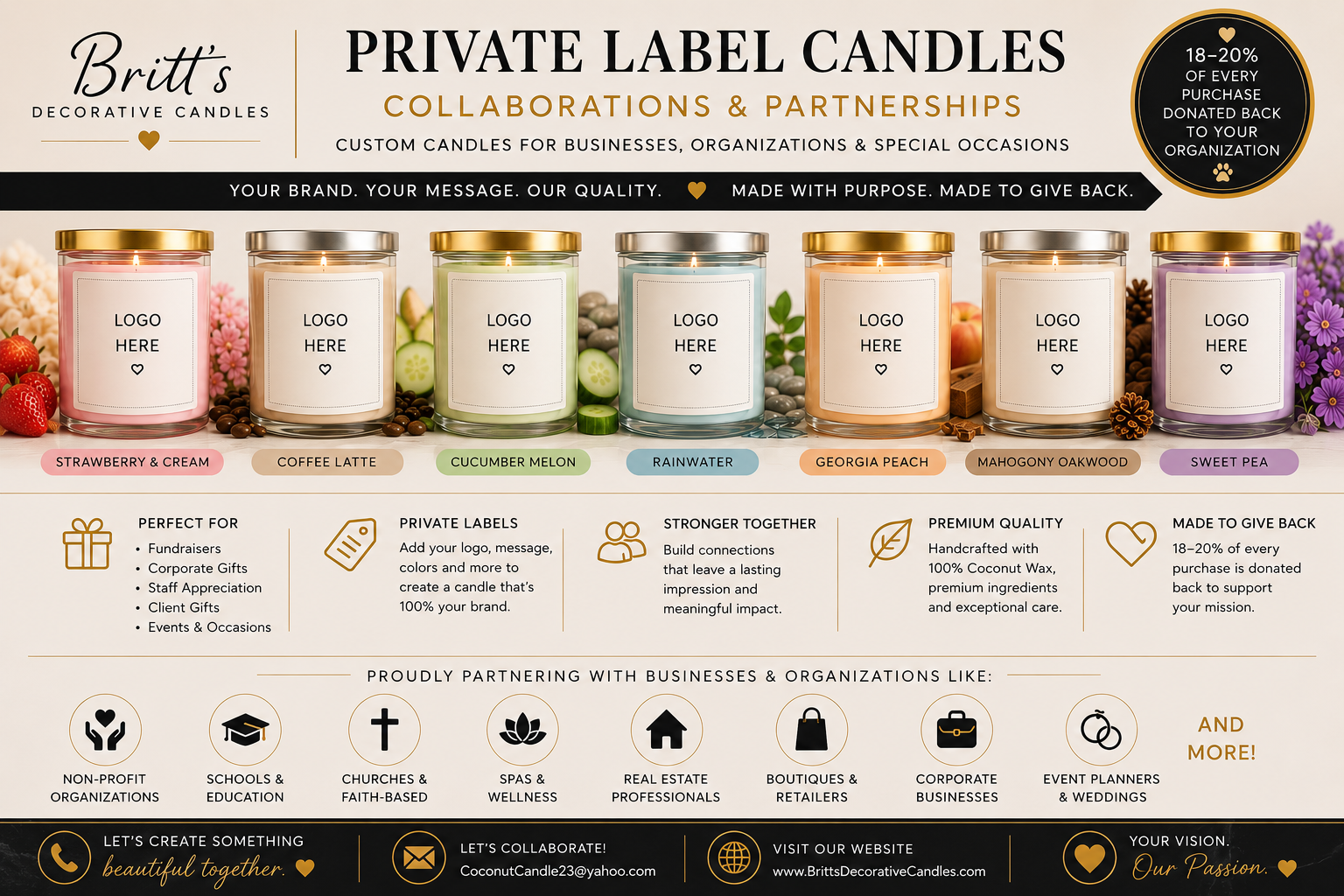
Wholesale with Britt’s Decorative Candles: Luxury Handcrafted Candles for Retailers, Boutiques & Businesses
Partner with Britt's Decorative Candles and Offer Your Customers Something They'll Remember
At Britt's Decorative Candles, we believe that every candle should be more than just a beautiful fragrance—it should create an experience. Our handcrafted candles are designed to bring warmth, elegance, and lasting memories into every home while giving retailers, boutiques, nonprofits, and businesses the opportunity to offer a premium product their customers will love.
Whether you're looking to stock your shelves with luxury candles, create an exclusive private label collection, purchase client appreciation gifts, or launch a fundraising campaign, we're excited to partner with you.
As a Michigan-based small business, we're proud to handcraft every candle using 100% premium coconut wax, premium fragrance oils, and luxury packaging that reflects quality and attention to detail.
Why Wholesale with Britt's Decorative Candles?
Today's consumers appreciate shopping small and supporting handcrafted products. They also want products that tell a story.
When you partner with Britt's Decorative Candles, you're offering your customers:
Handcrafted luxury candles
Premium 100% coconut wax
Clean-burning candles
Beautiful gift-ready presentation
Modern luxury branding
Seasonal collections
Private label opportunities
Limited edition collections
Fundraising partnerships
Corporate gifting solutions
Our candles are designed to fit beautifully into boutiques, gift shops, salons, spas, hotels, bookstores, coffee shops, and many other retail environments.
Wholesale Pricing
We proudly offer wholesale pricing to approved retailers and organizations.
Retail Price
$25.00 per candle
Wholesale Price
50% OFF Retail
Wholesale Cost: $12.50 per candle
This pricing allows retailers to earn healthy profit margins while offering customers a luxury handcrafted candle at an affordable retail price.
Businesses We Love to Partner With
Our candles are perfect for:
Retail Stores
Gift Shops
Home Décor Stores
Boutiques
Floral Shops
Garden Centers
Bookstores
Gourmet Markets
General Stores
Beauty & Wellness
Hair Salons
Barber Shops
Day Spas
Massage Therapy Practices
Wellness Studios
Yoga Studios
Nail Salons
Estheticians
Hospitality
Hotels
Resorts
Bed & Breakfasts
Airbnb Hosts
Vacation Rentals
Professional Services
Realtors
Mortgage Companies
Insurance Agencies
Law Offices
Financial Advisors
Medical Offices
Dental Offices
Perfect for:
Closing gifts
Client appreciation
Welcome gifts
Holiday gifts
Corporate Businesses
We create candles for:
Employee Appreciation
Employee of the Month
Corporate Events
Company Anniversaries
Holiday Gifts
Retirement Gifts
Client Gifts
Executive Gifts
Schools & Universities
Perfect for:
Teacher Appreciation Week
Staff Appreciation
Graduation Gifts
Fundraisers
School Stores
PTA Events
Churches & Faith-Based Organizations
We proudly partner with churches by creating:
Visitor Gifts
Women's Ministry Gifts
Pastor Appreciation Gifts
Holiday Collections
Church Fundraisers
Conference Gifts
Baptism Gifts
Volunteer Appreciation Gifts
Nonprofit Organizations
We proudly collaborate with nonprofits by offering customized fundraising collections supporting:
Animal rescues
Women's shelters
Domestic violence organizations
Children's charities
Cancer awareness organizations
Veterans organizations
Community outreach programs
Eligible fundraising partnerships may receive 18–20% of qualifying sales donated back to their organization, depending on the campaign structure.
Private Label Services
One of our most popular services is our Private Label Candle Program.
We'll create candles featuring:
Your company logo
Your organization name
Event branding
Seasonal artwork
QR Codes
Personalized messages
Custom colors
Promotional campaigns
Perfect for businesses wanting products that are uniquely their own.
Special Event Collections
Our candles are perfect for:
Weddings
Bridal Showers
Baby Showers
Birthday Parties
Corporate Events
Holiday Parties
Conferences
Fundraisers
Grand Openings
Product Launches
Customer Appreciation Events
Wholesale Terms & Conditions
Minimum Order
Minimum opening wholesale order: 24 candles
Reorders: 12 candles
Wholesale Pricing
All wholesale orders receive 50% off the retail price.
Retail Price: $25.00
Wholesale Price: $12.50
Payment
Payment is required before production begins unless other terms have been agreed to in writing.
Accepted payment methods include:
Credit Cards
Debit Cards
PayPal
Square
Apple Pay
Google Pay
ACH/Bank Transfer (when applicable)
Production Time
Production typically takes 2–4 weeks, depending on order size and customization. Large orders and seasonal collections may require additional lead time.
Shipping
Shipping costs are calculated at checkout.
Shipping insurance is available and recommended for large orders.
Tracking information will be provided once your order ships.
Damaged Orders
Please inspect your shipment within 48 hours of delivery. If your order arrives damaged, contact us with photos of the products and packaging so we can work with you on an appropriate resolution.
Returns
Because wholesale candles are made to order and may include custom labels or branding, wholesale orders are generally non-refundable unless there is a manufacturing defect or shipping damage.
Private Label Orders
Private label customers are responsible for providing:
High-resolution logos
Brand colors
Approved artwork
Label text
Any required trademark permissions
A digital proof will be provided for approval before production begins.
Fundraising Orders
Organizations participating in fundraising campaigns will receive the agreed-upon donation percentage based on qualifying sales, as outlined in the partnership agreement.
Why Retailers Choose Britt's Decorative Candles
When you stock Britt's Decorative Candles, you're offering more than a candle. You're offering a handcrafted product with a story, made with premium ingredients and designed to help customers celebrate life's everyday moments.
Our mission is to create products that inspire connection, support local businesses, and help organizations give back to their communities through thoughtful collaborations.
Whether you're interested in wholesale, private labeling, corporate gifts, or fundraising, we'd be honored to partner with you.
Let's Grow Together
We believe the best partnerships are built on trust, quality, and shared purpose. From boutiques and salons to churches, schools, nonprofits, hotels, and corporate offices, Britt's Decorative Candles is ready to help you create a memorable experience for your customers, clients, employees, and community.
If you're ready to carry luxury handcrafted candles or create a custom collection for your organization, we'd love to hear from you.
Contact Us
Brittney Jarrett
Founder & CEO
Britt's Decorative Candles
Email: CoconutCandle23@yahoo.com
Website: www.BrittsDecorativeCandles.com
"Luxury handcrafted candles made with purpose, designed to elevate your brand, celebrate your customers, and create meaningful partnerships that make a lasting impact."
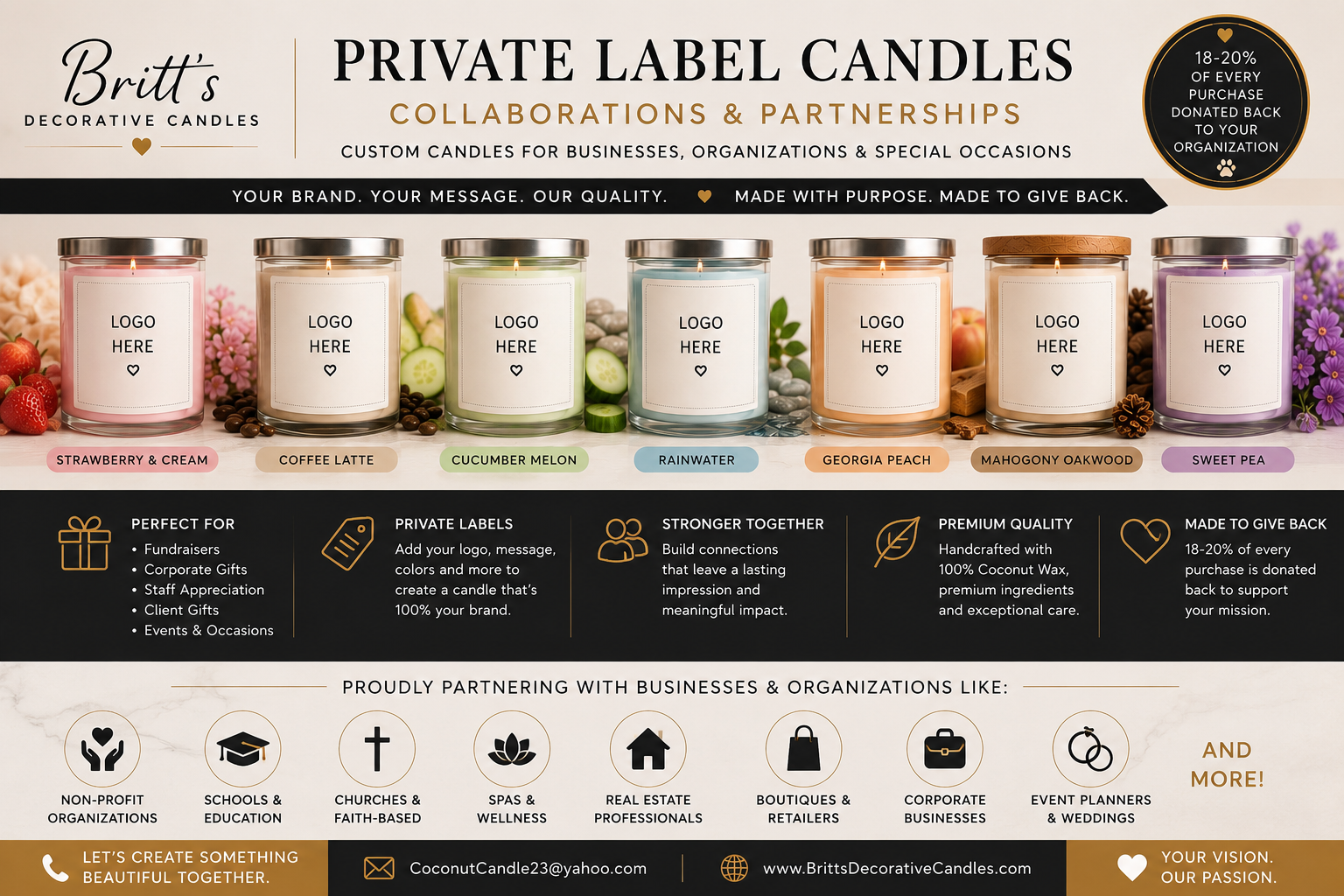
Elevate Your Brand with Private Label Candles: Collaborations & Partnerships That create Lasting Impressions
In today's competitive marketplace, businesses are constantly searching for creative ways to connect with customers, strengthen relationships, and leave a memorable impression. One of the most effective ways to do that is through thoughtfully designed, high-quality products that reflect your brand's identity. At Britt's Decorative Candles, we specialize in creating luxury handcrafted candles that do exactly that.
Whether you're a boutique owner, nonprofit organization, realtor, spa, salon, hotel, church, school, or corporate business, our private label candle program is designed to help you create a one-of-a-kind product that represents your brand while providing an unforgettable experience for your customers, clients, employees, and community.
What Are Private Label Candles?
Private label candles are custom candles created specifically for your organization. Instead of displaying the Britt's Decorative Candles label, each candle can be personalized with your:
Company logo
Organization name
Custom artwork
Event branding
Seasonal designs
Marketing message
QR code
Website
Social media information
Thank-you message
Your supporters or customers receive a luxury handcrafted candle that proudly represents your organization while still benefiting from the premium quality and craftsmanship of Britt's Decorative Candles.
Collaboration Is More Than Selling Products
At Britt's Decorative Candles, we believe the best partnerships are built on shared values.
We don't simply provide candles—we collaborate with organizations to create products that strengthen relationships, celebrate milestones, and support meaningful causes.
Our goal is to become an extension of your brand by helping you create memorable experiences through customized candle collections.
Perfect for Businesses of Every Size
We proudly collaborate with:
Boutiques
Gift shops
Realtors
Hotels
Resorts
Bed & Breakfasts
Hair salons
Barber shops
Day spas
Massage therapy practices
Wellness centers
Churches
Schools
Universities
Nonprofit organizations
Medical offices
Dental practices
Coffee shops
Restaurants
Corporate offices
Event planners
Wedding planners
Whether you're ordering twenty candles or several hundred, we're committed to creating a collection that reflects your vision.
Fundraising Partnerships That Give Back
One of our favorite ways to collaborate is through nonprofit fundraising.
We proudly partner with organizations by donating 18–20% of qualifying fundraiser candle sales back to support their mission.
Together, we can create exclusive fundraising collections that help:
Animal rescues
Humane societies
Women's shelters
Domestic violence organizations
Children's charities
Veterans organizations
Cancer support groups
Schools
Churches
Community outreach programs
Every candle becomes an opportunity to make a meaningful difference.
Corporate Gifts That Leave a Lasting Impression
Businesses are always looking for thoughtful gifts that feel personal instead of ordinary.
Our private label candles are perfect for:
Client appreciation gifts
Closing gifts for realtors
Holiday gifts
Corporate events
Networking events
Employee welcome gifts
Conference gifts
VIP appreciation gifts
Customer loyalty gifts
Grand openings
Instead of another promotional item that gets tucked away, your clients receive a luxury candle they'll enjoy long after the occasion.
Employee Recognition & Staff Appreciation
Your employees work hard every day. Show your appreciation with customized candles created exclusively for your team.
Our candles are ideal for:
Employee of the Month
Staff Appreciation Week
Teacher Appreciation Week
Nurses Week
Administrative Professionals Day
Volunteer Appreciation
Retirement gifts
Work anniversaries
Promotions
Holiday celebrations
Each candle can feature your company logo along with a personalized message of gratitude.
Weddings, Events & Special Celebrations
Private label candles also make unforgettable keepsakes for life's biggest moments.
We create custom candles for:
Weddings
Bridal showers
Baby showers
Bachelor and bachelorette parties
Birthday celebrations
Family reunions
Graduation parties
Anniversary celebrations
Sweet 16 events
Corporate galas
Charity dinners
Every guest leaves with a beautiful reminder of your special day.
Seasonal & Limited-Edition Collections
Create excitement throughout the year with exclusive seasonal collections.
Popular themes include:
Spring Collection
Summer Escape
Fall Harvest
Holiday Collection
Valentine's Day
Mother's Day
Father's Day
Teacher Appreciation
Breast Cancer Awareness Month
Giving Tuesday
Christmas Gift Collection
Limited-edition candles encourage repeat customers while giving your business fresh marketing opportunities throughout the year.
Why Businesses Choose Britt's Decorative Candles
We believe every detail matters.
Our handcrafted candles are created using premium ingredients and designed with elegance in mind. We work closely with every partner to ensure your finished product reflects the quality and professionalism of your brand.
When you partner with Britt's Decorative Candles, you receive:
Luxury handcrafted candles
Premium fragrances
Beautiful custom labels
Professional product presentation
Personalized collaboration
Flexible ordering options
Private label branding
Fundraising support
Exceptional customer service
Our mission is to help your organization stand out while creating products people genuinely enjoy.
A Partnership Built on Purpose
At Britt's Decorative Candles, collaboration is about more than creating beautiful candles. It's about building relationships that inspire generosity, celebrate milestones, and strengthen communities.
Whether you're launching a new product, thanking loyal customers, recognizing employees, hosting an event, or raising money for an important cause, we'd love to help bring your vision to life.
Together, we can create a custom candle collection that reflects your brand, supports your mission, and leaves a lasting impression.
Let's Create Something Meaningful Together
If you're interested in private label candles, wholesale opportunities, fundraising partnerships, or custom collaborations, we'd love to connect.
Brittney Jarrett
Founder & CEO
Britt's Decorative Candles
📧 CoconutCandle23@yahoo.com
🌐 www.BrittsDecorativeCandles.com
From custom labels and luxury gifts to fundraising partnerships and corporate collaborations, Britt's Decorative Candles is here to help you create products that people remember—and partnerships that make a lasting impact.
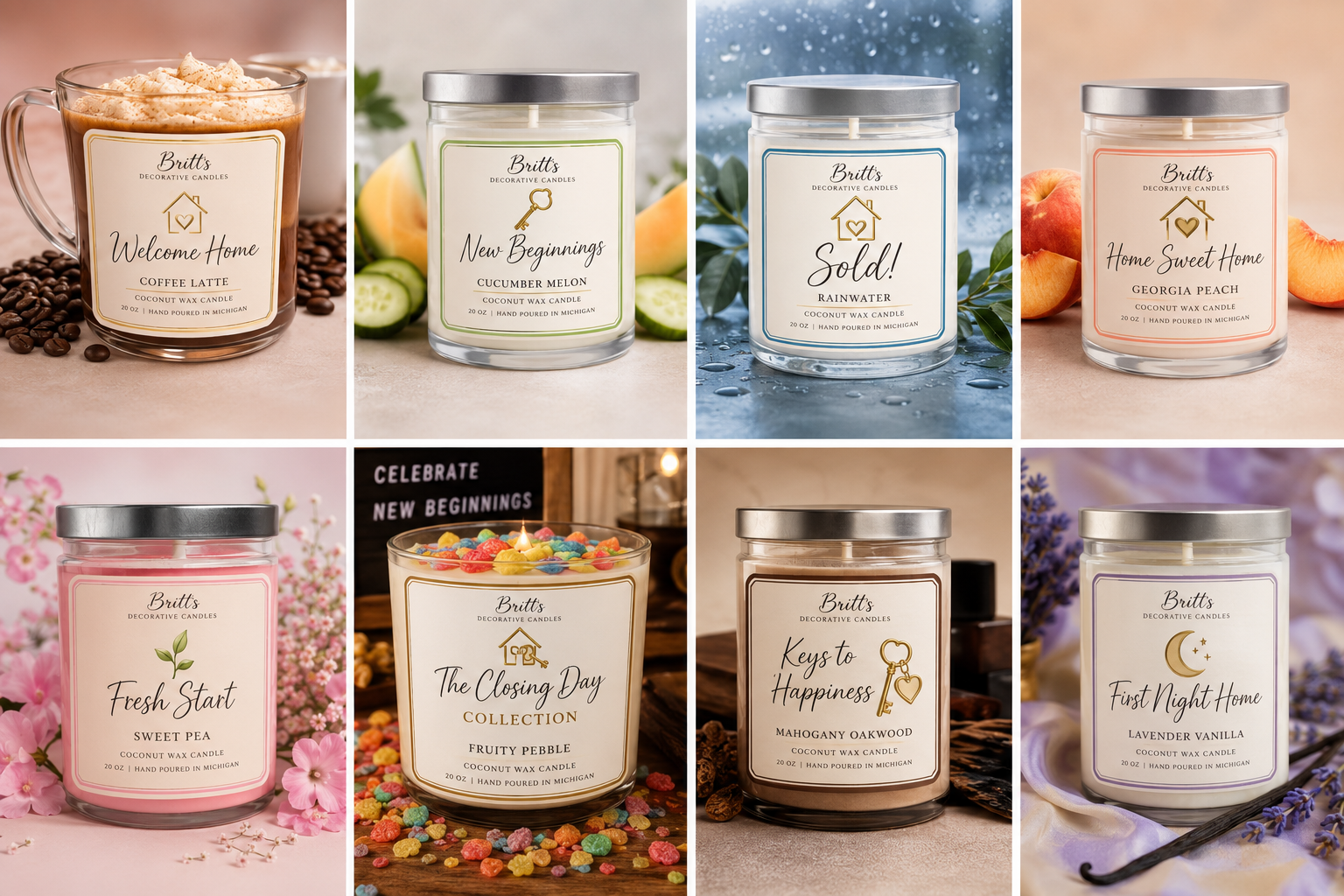
Closing More Than Homes: Luxury Closing Gifts, Clients Appreciation & Custom Candles Collaborations For realtors
How Britt's Decorative Candles Helps Real Estate Professionals Create Memorable Client Experiences
Buying or selling a home is one of life's biggest milestones. It's more than signing paperwork or exchanging keys—it's the beginning of a new chapter. Whether it's a young couple purchasing their first home, a growing family upgrading to a larger space, or retirees settling into their dream home, every closing deserves to be celebrated.
At Britt's Decorative Candles, we help real estate professionals elevate those unforgettable moments with handcrafted luxury candles that leave a lasting impression.
As a Michigan-based, woman-owned small business, Britt's Decorative Candles specializes in premium coconut wax candles designed for client appreciation, closing gifts, open houses, corporate gifting, private labeling, wholesale partnerships, and custom collections. Our mission is simple: help realtors build stronger relationships through meaningful gifts that clients will remember long after closing day.
A Closing Gift They'll Actually Use
Many closing gifts are appreciated in the moment but quickly forgotten. Gift baskets get consumed, flowers fade, and generic promotional items often end up tucked away in a drawer.
A beautifully handcrafted candle is different.
Every time your client lights their candle, they'll remember the excitement of receiving the keys to their new home—and they'll remember the thoughtful realtor who helped make it happen.
That kind of lasting impression builds trust, strengthens relationships, and encourages future referrals.
Personalized Closing Gifts
One of our most popular services is creating custom candles designed specifically for real estate professionals.
We can personalize each candle with:
Your real estate logo
Brokerage branding
Client's family name
Closing date
Property address
Welcome Home message
Inspirational quote
Personalized thank-you note
Imagine handing your clients a candle that says:
"Welcome Home, The Johnson Family"
or
"Home Sweet Home"
or
"Congratulations on Your New Beginning"
These thoughtful details transform a beautiful candle into a keepsake that celebrates one of the happiest days in your client's life.
Strengthen Your Brand Through Private Label Candles
Looking for a unique way to stand out in a competitive market?
Private label candles allow you to create a signature gift that reflects your personal brand.
We can design exclusive candles featuring:
Your company colors
Custom fragrance collections
Branded labels
Holiday editions
Luxury packaging
Personalized inserts
Instead of giving clients another branded coffee mug or keychain, offer something elegant, practical, and memorable.
Client Appreciation Gifts Throughout the Year
Relationships don't end at closing.
The best real estate professionals continue nurturing relationships long after the transaction is complete.
Our candles make perfect gifts for:
Home purchase anniversaries
Holiday gifts
Client birthdays
Housewarming celebrations
Referral thank-you gifts
Home renovation celebrations
First-time homeowners
Investment property purchases
Vacation home buyers
A thoughtful surprise delivered months after closing reminds clients that they are valued beyond the sale.
Gifts for Your Team and Colleagues
Real estate is built on relationships—not only with clients, but with the professionals who help make every transaction successful.
Our candles make meaningful gifts for:
Realtors
Brokers
Administrative staff
Office managers
Marketing teams
Transaction coordinators
Loan officers
Mortgage lenders
Title companies
Home inspectors
Insurance agents
Closing attorneys
Celebrate birthdays, promotions, work anniversaries, retirements, holiday parties, or simply say thank you with a gift that reflects your appreciation.
Family Gifts That Celebrate New Beginnings
A new home is a family milestone.
We also create candles perfect for celebrating everyone who shares in the excitement, including:
Parents
Grandparents
Newlyweds
Children
Housewarming hosts
Friends
Neighbors
Our candles help commemorate the joy of gathering in a new space and creating lasting memories.
Open House and Event Collaborations
Looking for a memorable way to elevate your next event?
Britt's Decorative Candles can partner with your real estate business to provide custom candles for:
Open houses
Client appreciation events
Broker open houses
Grand openings
Community events
Homebuyer seminars
Networking mixers
Real estate conferences
Charity events
Holiday celebrations
These candles add warmth and sophistication while introducing guests to your brand in a meaningful way.
Realtor Appreciation Gifts
Behind every successful real estate transaction is a professional dedicated to helping families achieve their dreams.
Our candles are perfect for recognizing:
Top-producing agents
Rookie of the Year
Team achievements
Office milestones
Retirement celebrations
Awards banquets
Holiday appreciation events
Each candle can be customized to honor the recipient and celebrate their accomplishments.
Fundraising and Community Partnerships
At Britt's Decorative Candles, we believe in giving back.
We're proud to collaborate with organizations and businesses on fundraising campaigns that support meaningful causes.
Real estate teams can partner with us to:
Host community fundraisers
Support local nonprofits
Raise money for schools
Benefit animal rescues
Sponsor neighborhood events
Give back to local charities
Together, we can strengthen the communities where you live and work while creating positive visibility for your business.
Why Realtors Choose Britt's Decorative Candles
Every candle is handcrafted with premium coconut wax and thoughtfully designed to reflect elegance, warmth, and quality.
When you partner with Britt's Decorative Candles, you receive:
Premium handcrafted candles
Custom labels
Private label collections
Luxury gift packaging
Bulk and wholesale pricing
Corporate gifting solutions
Personalized customer service
Michigan-made products
Memorable gifts your clients will actually enjoy
Our goal is to help you create an experience that extends beyond the closing table.
More Than a Gift—A Lasting Relationship
A home is filled with moments—family dinners, holiday celebrations, birthdays, quiet evenings, and new beginnings. A handcrafted candle becomes part of those memories, filling a home with warmth and fragrance while reminding clients of the professional who helped them reach that milestone.
At Britt's Decorative Candles, we don't just create candles—we help you create unforgettable experiences that strengthen relationships, encourage referrals, and reflect the level of care you provide.
Whether you're looking for elegant closing gifts, branded client appreciation collections, holiday gifts, or custom event favors, we'd love the opportunity to partner with you.
Let's work together to transform every closing into a celebration and every client into a lifelong advocate for your business.
Partner With Britt's Decorative Candles
We proudly offer:
Luxury closing gifts
Custom and private-label candles
Client appreciation gifts
Realtor and broker appreciation gifts
Gifts for colleagues and office staff
Family and housewarming gifts
Open house favors
Holiday gifting
Bulk and wholesale pricing
Community fundraiser collaborations
Corporate gifting
Event favors for grand openings, networking events, and appreciation celebrations
Every candle is handcrafted with care and designed to leave a lasting impression—because exceptional service deserves an exceptional gift.
Brittney Jarrett
Owner | Founder | CEO
Britt's Decorative Candles
📧 CoconutCandle23@yahoo.com
🌐 www.BrittsDecorativeCandles.com
"Handcrafted with care. Poured with purpose. Creating memorable gifts for every new beginning."
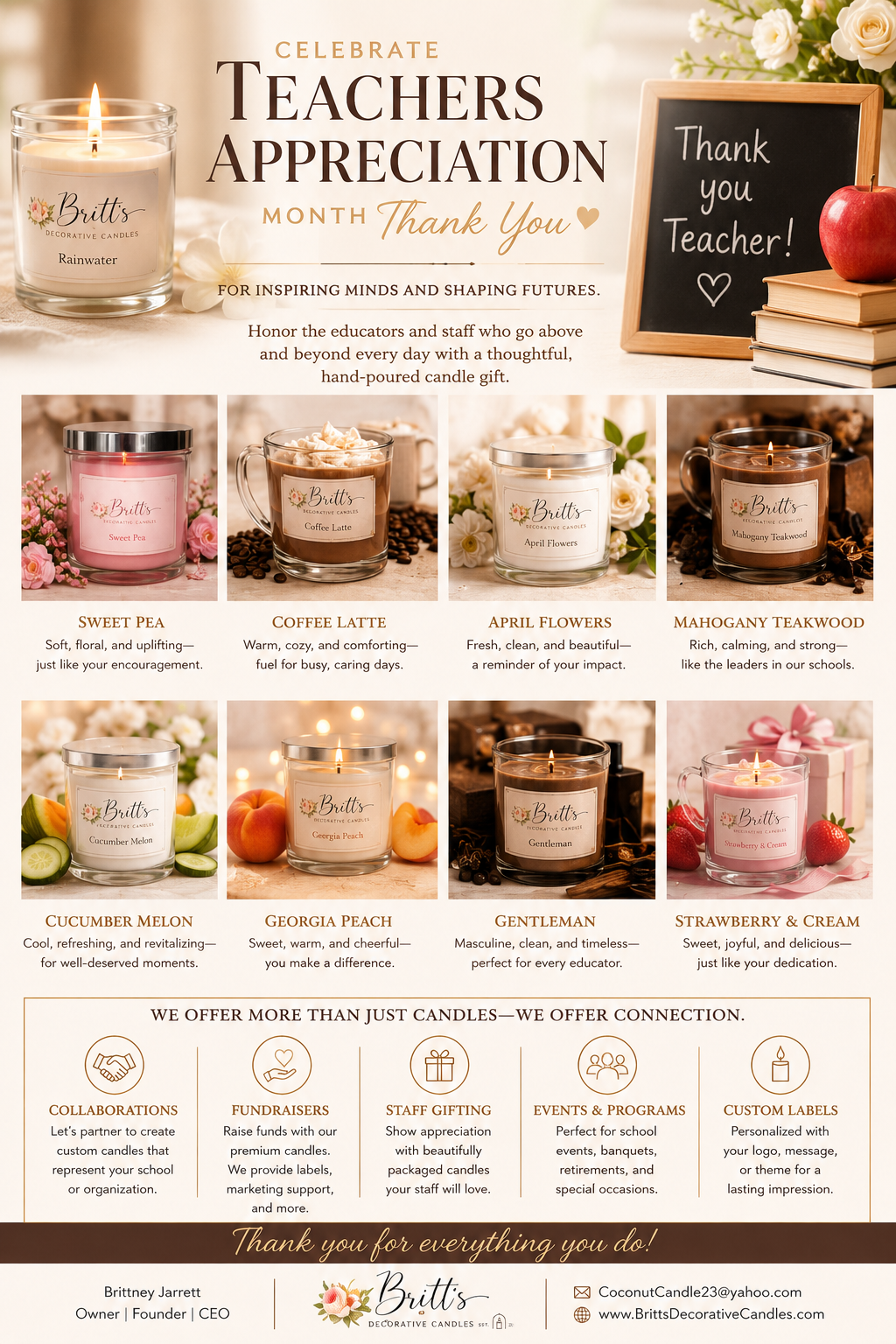
Teacher Appreciation Gifts, School Fundraisers & Custom Candles Collaborations
How Britt's Decorative Candles Helps Schools Celebrate, Raise Funds, and Create Lasting Memories
Every school is built on the dedication of extraordinary people. Teachers inspire future generations, principals lead with purpose, office staff keep everything organized, custodians work tirelessly behind the scenes, bus drivers safely transport students every day, and countless volunteers give their time to make each school community stronger.
At Britt's Decorative Candles, we believe every one of those individuals deserves to be celebrated.
As a Michigan-based, woman-owned small business, Britt's Decorative Candles creates luxurious hand-poured coconut wax candles that transform ordinary gifts into meaningful expressions of appreciation. Whether you're looking for thoughtful Teacher Appreciation gifts, planning a school fundraiser, recognizing retiring staff, or creating custom gifts for special events, we're here to partner with schools and educational organizations to make every occasion memorable.
Celebrating the People Who Shape Tomorrow
Teachers spend countless hours preparing lessons, encouraging students, staying after school, attending events, grading papers, and investing their hearts into helping children succeed.
Teacher Appreciation Week and Teacher Appreciation Month provide the perfect opportunity to say one simple but powerful phrase:
Thank you.
Instead of another generic gift, imagine presenting each educator with a beautifully handcrafted candle featuring a personalized label that reminds them how valued they truly are.
A custom candle becomes more than a gift—it becomes a keepsake they can enjoy long after the celebration has ended.
Personalized Teacher Appreciation Gifts
At Britt's Decorative Candles, we offer personalized gifts for:
Teacher Appreciation Week
Teacher Appreciation Month
Principal Appreciation
Administrative Professionals Day
School Nurse Appreciation
Counselor Appreciation
Librarian Appreciation
Custodial Staff Recognition
Bus Driver Appreciation
Cafeteria Staff Recognition
Coach Appreciation
Volunteer Recognition
School Board Appreciation
Every candle can be customized with:
School logo
School colors
Teacher's name
Inspirational quote
School mascot
Graduation year
Thank-you message
District branding
These personalized details transform a beautiful candle into a meaningful gift that educators will remember.
School Fundraisers That Everyone Loves
Fundraising doesn't always have to mean selling candy, popcorn, wrapping paper, or cookie dough.
Imagine offering families a premium, handcrafted candle they can enjoy in their homes while supporting their local school.
Our fundraising partnerships are designed to benefit everyone involved.
Schools receive a percentage of every candle sold, while families receive a high-quality product they actually want.
Fundraisers can help support:
Classroom supplies
School libraries
Music programs
Athletics
PTA and PTO organizations
Student clubs
Graduation celebrations
Field trips
STEM programs
Art programs
Technology upgrades
Scholarship funds
Playground improvements
School events
Instead of asking families to purchase disposable products, schools can offer handcrafted candles that continue bringing warmth and fragrance into their homes long after the fundraiser ends.
Custom Labels for Every School
One of our favorite services is creating custom candle labels.
Imagine candles that feature:
Lincoln Elementary
"Lighting the Way for Future Leaders."
Or:
Class of 2027
"Dream Big. Learn More. Become More."
Or:
Teacher Appreciation Week
"Because Every Great Story Begins with a Great Teacher."
Every label becomes a lasting reminder of a special moment.
Gifts Beyond Teacher Appreciation
Schools celebrate many milestones throughout the year.
Our candles make thoughtful gifts for:
Retirement celebrations
Employee anniversaries
Years of service awards
Welcome gifts for new teachers
New principal gifts
Holiday gifts
Graduation gifts
Student leadership recognition
Honor Roll celebrations
Volunteer appreciation
Parent organization gifts
Guest speakers
Community partners
Every occasion deserves something meaningful.
School Event Collaborations
We love partnering with schools throughout the year.
Some collaboration opportunities include:
Back-to-School Events
Welcome teachers with personalized gift boxes before students arrive.
Open House
Offer school-branded candles to families and supporters.
Holiday Markets
Feature locally made candles during winter events.
Spring Festivals
Partner with PTO organizations to create seasonal fundraising collections.
Teacher Conferences
Provide appreciation gifts for educators attending conferences or professional development.
Staff Retreats
Create relaxing wellness-themed gift boxes to encourage self-care.
Why Schools Choose Britt's Decorative Candles
Our candles are handcrafted with premium coconut wax and carefully selected fragrance oils to create a clean-burning, luxurious experience.
We pride ourselves on:
Hand-poured craftsmanship
Elegant presentation
Beautiful gift packaging
Personalized labels
Premium fragrances
Local Michigan business
Reliable customer service
Meaningful collaborations
Every candle is created with attention to detail because we understand that every gift represents your appreciation.
Supporting Local Businesses Strengthens Communities
When schools partner with local businesses, everyone benefits.
Instead of purchasing mass-produced gifts, schools have the opportunity to support entrepreneurs who are passionate about serving their communities.
As the owner of Britt's Decorative Candles, I know firsthand the value of hard work, dedication, and building something meaningful from the ground up.
My mission is not simply to sell candles.
It's to create memorable experiences that bring people together through thoughtful gifting and meaningful partnerships.
Let's Create Something Special Together
Whether you're a school administrator, PTO president, principal, teacher, coach, or event coordinator, I'd love the opportunity to collaborate with you.
Together, we can create customized gifts and fundraising opportunities that reflect your school's unique identity while supporting your goals.
Whether you're recognizing one teacher or an entire district, planning a fundraiser, celebrating retirement, or organizing a school-wide appreciation event, Britt's Decorative Candles is here to help make it unforgettable.
From custom labels and branded collections to bulk orders and fundraising partnerships, we're committed to providing beautiful, handcrafted candles that leave a lasting impression.
Partner With Britt's Decorative Candles
We proudly offer:
Teacher Appreciation Week & Month gifts
School fundraisers
Custom label candles
Bulk and wholesale pricing
Staff appreciation gifts
Retirement gifts
Holiday collections
PTO & PTA fundraising partnerships
Principal and administrator gifts
Volunteer recognition gifts
Graduation gifts
Event favors
Corporate and educational collaborations
Let's celebrate the educators who change lives every day—one beautifully handcrafted candle at a time.
Brittney Jarrett
Owner | Founder | CEO
Britt's Decorative Candles
📧 CoconutCandle23@yahoo.com
🌐 www.BrittsDecorativeCandles.com
"Handcrafted with care. Poured with purpose. Made to celebrate the people who make a difference."
Teac

7 Ways to Budget working a 9-5 and Running a Business
Balancing a 9-to-5 job while building a candle business is no small task. It requires discipline, creativity, and—most importantly—smart budgeting. When your income is split between a steady paycheck and a growing side hustle, every dollar has a purpose. The goal isn’t just to make candles; it’s to build a sustainable brand without burning out financially. Here are seven practical ways to budget effectively while working full-time and growing your candle business on the side.
1. Separate Your Personal and Business Finances
One of the first and most important steps is keeping your personal money and business money completely separate. Even if your candle business is just starting out, open a dedicated checking account for it. This helps you track exactly how much you’re spending on supplies like wax, jars, fragrance oils, labels, and packaging.
When everything is mixed together, it becomes almost impossible to understand whether your business is actually profitable. Separation also makes tax season much easier and helps you make more informed decisions about scaling your business.
2. Create a Strict Monthly Candle Budget
When you’re working a 9-to-5, your paycheck is your foundation. Instead of randomly reinvesting into your candle business, assign a specific monthly budget for it. Decide ahead of time how much of your income will go toward supplies, marketing, and shipping materials.
For example, you might allocate a fixed amount like $200–$500 per month depending on your income level and goals. The key is consistency. A structured budget prevents overspending during “creative bursts” when you feel tempted to buy everything at once.
3. Prioritize High-ROI Supplies First
Not all expenses are equal in a candle business. Some purchases directly impact your sales, while others are just aesthetic upgrades. When budgeting, focus first on high-return items like quality wax, reliable wicks, and strong fragrance oils.
Fancy packaging or custom molds can come later. At the beginning stages, your priority should be product performance—how well your candles burn, smell, and hold scent throw. A strong product sells itself and reduces the need for heavy marketing spending.
4. Batch Your Purchases to Save Money
Instead of buying supplies randomly throughout the month, plan bulk purchases. Buying wax, jars, and fragrance oils in larger quantities often reduces cost per unit and saves on shipping fees.
Batching also helps you avoid impulse buying, which can quietly drain your budget. Set a schedule—maybe once or twice a month—where you review inventory and restock intentionally. This keeps your finances more predictable and controlled.
5. Reinvest a Set Percentage of Your Profits
When sales start coming in, it can be tempting to spend freely or treat the income as extra cash. Instead, establish a reinvestment rule. For example, reinvest 50–70% of your candle profits back into the business, and keep the rest for personal use or savings.
This approach helps your business grow steadily without relying too heavily on your 9-to-5 paycheck. Over time, reinvestment becomes the engine that scales your candle brand into something more sustainable.
6. Use Free or Low-Cost Marketing Strategies
Marketing can quickly become expensive if you’re not careful. As a small business owner working full-time, your best strategy is to lean into free or low-cost platforms like TikTok, Instagram Reels, and YouTube Shorts.
Show behind-the-scenes content, candle pouring processes, wick trimming, and scent descriptions. These types of videos often perform well organically and don’t require paid ads. The more consistent your content, the less you need to spend on marketing early on.
7. Track Everything Weekly, Not Just Monthly
Many small business owners make the mistake of only reviewing finances at the end of the month. When you’re balancing a job and a side business, that’s too slow. Instead, do a weekly check-in on your spending and earnings.
Track how much you spent on supplies, how many candles you sold, and what your profit margins look like. This helps you catch overspending early and adjust quickly before it becomes a larger issue. Even a simple spreadsheet can completely change how you manage your growth.
Final Thoughts
Running a candle business while working a 9-to-5 job is all about balance and intentional decisions. You don’t need a massive budget to succeed—you need structure, consistency, and discipline. By separating finances, budgeting monthly, prioritizing smart purchases, and tracking your progress weekly, you set yourself up for long-term success instead of short-term burnout.
Your 9-to-5 provides stability, but your candle business holds your creative future. When both are managed wisely, they don’t compete—they support each other.
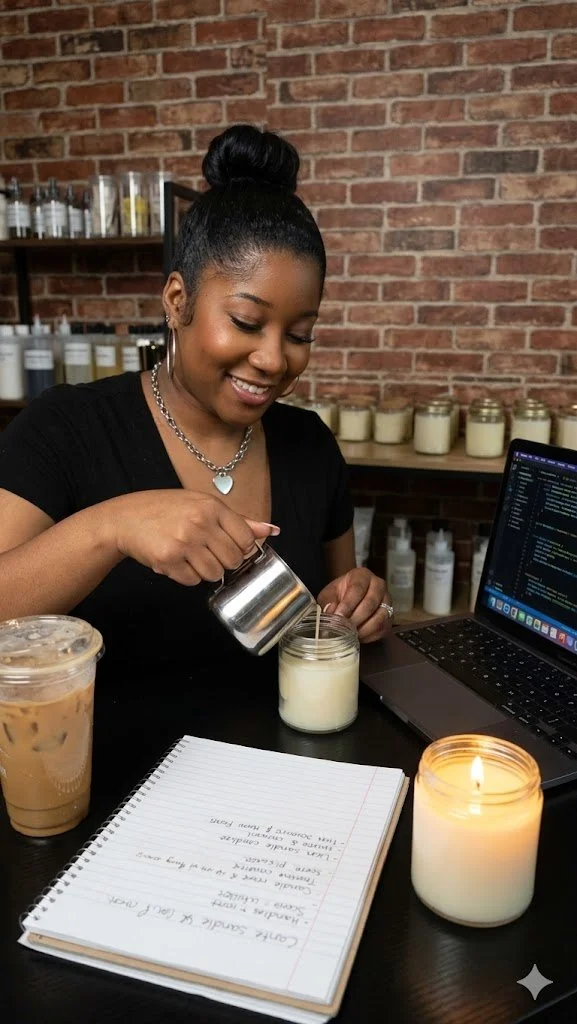
WHY CONSISTENCY MATTERS MORE THAN PERFECTION
Perfection gleams like a polished trophy: flawless results, no missteps, a final product so immaculate it seems to require no effort. It’s an appealing target, especially in creative work, home projects, and personal routines. Yet that shine can blind us. It convinces many to delay, defer, or abandon efforts because the conditions aren’t “perfect.” Consistency, by contrast, is quieter. It’s the daily practice, the slow accumulation of small actions that yield meaningful results. For anyone aiming to build habits, craft a home, or grow a small creative business, consistency matters more than perfection — and here’s why.
Small steps build real progress A single perfect moment won’t change much on its own. A perfect Sunday spent organizing, a flawless candle design completed in one sitting, or a single viral post are satisfying, but their effects are often fleeting. Consistency turns small, imperfect steps into lasting change. When you show up repeatedly — light a candle at the same time each evening to mark a pause, write ten minutes every morning, photograph one product weekly — those small acts compound. Over weeks and months, they become habits and systems that create reliable progress.
Perfection paralyzes; consistency propels Perfectionism breeds hesitation. If the bar is “perfect,” the tendency is to wait until conditions align: more time, more inspiration, a better forecast. That waiting can become inertia. Consistency, on the other hand, reduces the decision-making burden. The question shifts from “Is this flawless?” to “Did I do the thing today?” That simple shift is powerful. Momentum accumulates through repetition. Even imperfect outputs become useful: they teach, they iterate, and they keep you moving forward.
Practice improves craft more than one flawless attempt Skill development relies on repetition. Musicians don’t reach mastery after one perfect performance; makers don’t refine a product in a single batch. Each attempt reveals what works and what doesn’t — for gravestones of taste, process tweaks, or scent blends. Consistent practice exposes the edges of your skill and gives you the data to improve. Imperfect attempts are opportunities for feedback. Over time, those iterations foster subtle refinements that a single perfect result could never teach.
Reliability builds trust Whether you’re a creative business, a host in your own home, or a parent, consistency breeds trust. Customers and guests value predictability: consistent quality, consistent communication, consistent delivery. A brand that releases products and content on a reliable cadence, even if every item isn’t flawless, creates a dependable relationship with its audience. Similarly, household rituals — a steady evening routine, a weekly decluttering session — make home life feel anchored. Perfect execution is less important than the assurance that something will happen regularly.
Consistency is kinder to creativity Perfectionism often tampers with creativity. When the goal is faultlessness, risk-taking and experimentation decline. Artists and makers might stick to safe choices that have worked before, avoiding bold experiments that could fail. Consistency invites curiosity because the stakes are lower: one imperfect attempt is just part of the process. That freedom encourages exploration, which can lead to innovations and discoveries a perfection-driven approach would never allow.
Reduces stress, increases sustainability Perfectionism is exhausting. The pursuit of flawless outcomes demands high energy and creates anxiety each time a task appears. Consistency distributes effort more sustainably. By breaking tasks into manageable, repeatable steps, you avoid extreme bursts of work and the burnout that follows. This steady pace is easier to maintain long-term. For small businesses and creatives especially, sustainable output beats intermittent brilliance: a steady stream of solid work builds momentum without draining resources.
Consistency converts intentions into reality We often have noble intentions: to practice mindfulness, to redesign a room, to grow a side business. But intention alone doesn’t produce change — action does. Consistency transforms intention into habit. Lighting an intention-setting candle nightly, writing one paragraph a day, or spending fifteen minutes on inventory each morning turns vague goals into tangible routines. Over time, these routines become part of identity: you become the person who journals, the maker who ships weekly, the homeowner who tends their space.
Imperfections humanize and connect Flawless outputs can feel sterile. Imperfections, when shared thoughtfully, humanize. They signal authenticity and vulnerability. Customers connect with the story behind a handcrafted candle that didn’t go perfectly the first time; friends appreciate a dinner that’s warm and honest rather than staged. Consistency with a human touch strengthens relationships more than a one-off perfect display ever could.
How to prioritize consistency without losing quality
Set realistic rhythms: Commit to a cadence you can maintain — weekly product photos, five minutes of daily creative practice, a nightly fifteen-minute tidy. Small, sustainable rhythms are the backbone of consistency.
Embrace iteration: Treat each attempt as a version
In a world obsessed with curated Instagram feeds, polished LinkedIn profiles, and "overnight" success stories, we have developed a toxic relationship with perfection. We wait for the "perfect" moment to start a business, the "perfect" workout plan to hit the gym, or the "perfect" sentence to finish a chapter.
The reality? Perfection is a ghost—it’s always just out of reach, and chasing it is the fastest way to stay exactly where you are. If you want to actually change your life, build a brand, or master a craft, you need to trade your pursuit of perfection for the power of consistency.
The Perfection Trap: Why We Get Stuck
Perfectionism is often just procrastination in a fancy suit. We tell ourselves we’re being "diligent" or "high-standard," but usually, we’re just afraid of being judged.
The All-or-Nothing Mentality: When you aim for perfection, one small mistake feels like a total failure. If you miss one day of a "perfect" diet, you’re tempted to throw the whole week away.
Analysis Paralysis: We spend so much time researching the "best" way to do something that we never actually do the thing.
The Finishing Line Fallacy: Perfectionists focus on the end result. Consistent people focus on the process.
As we see in the world of artisanal crafts, like candle making, the "perfect" product doesn't happen on the first try. It happens after dozens of "good enough" attempts that were meticulously documented and improved upon.
The Compounding Interest of Showing Up
Consistency is the secret sauce of growth because it utilizes compounding. In finance, small amounts of money invested regularly grow exponentially over time. The same applies to your habits.
1. The 1% Rule
If you improve by just 1% every day, you will be 37 times better by the end of the year. You don't need a massive breakthrough; you just need to not quit. Consistency allows you to bank small wins that eventually snowball into massive transformations.
2. Building Cognitive Ease
The first time you try something new, your brain has to work incredibly hard. It’s exhausting. But when you do that same task consistently, it moves from your conscious mind to your subconscious. It becomes a habit. Once a behavior is a habit, it requires almost zero willpower to maintain. Consistency turns "hard work" into "just what I do."
3. Reliability and Trust
Whether you are balancing motherhood and a small business or working a 9-to-5, consistency builds trust. People (and customers) don't need you to be flawless; they need to know you’re going to show up when you say you will.
Behind the Scenes: The Pros and Cons of "Good Enough"
Embracing consistency over perfection doesn't mean lowering your standards to zero. It means adopting a "Minimum Viable Progress" mindset. Here is the reality of what that looks like:
The Pros
Reduced Stress: When you give yourself permission to be "B-grade" today, the crushing weight of expectation disappears. You can actually enjoy the work.
Faster Learning: You learn more from finishing five "okay" projects than from never finishing one "perfect" one. Failure is the best teacher, and consistency gives you more opportunities to fail—and thus, more opportunities to learn.
Momentum: Physics tells us it takes more energy to start a moving object than to keep it going. Consistency keeps your "momentum engine" warm.
The Cons
The Boredom Wall: Consistency is often boring. It’s doing the same mundane tasks over and over. Many people quit not because they can't do the work, but because they lose interest in the routine.
The Lack of Instant Gratification: Perfectionism offers the "high" of a big dream. Consistency offers the "slow burn" of gradual progress. You won't see results in a week, and that can be frustrating.
Practical Ways to Prioritize Consistency
If you struggle with the "perfectionist itch," here are three ways to shift your focus:
Reduce the Barrier to Entry: If you want to start running, tell yourself you only have to put on your shoes and walk for five minutes. Make the task so small it’s impossible to say no.
Focus on the Streak, Not the Score: Use a calendar to mark an "X" for every day you show up. Your only goal is to not break the chain.
Audit Your Ingredients: Just like a proper wick test requires using the right wax and fragrance, your habits require the right environment. Remove distractions that make consistency difficult.
Conclusion: The Artisan’s Mindset
At the end of the day, excellence isn't an act; it’s a habit. The most successful people in the world aren't the ones who had the most "perfect" ideas—they are the ones who were still standing when everyone else got tired and went home.
Whether you’re pouring candles, writing a book, or raising a family, remember: A "messy" action will always beat a "perfect" intention. Show up today. Be "average" if you have to. Just don't stop.
Final Note: Your "done" is someone else’s "impossible." Stop comparing your behind-the-scenes to everyone else’s highlight reel and just keep pouring your heart into the process.
How can you simplify your current goal today to make showing up feel easier?
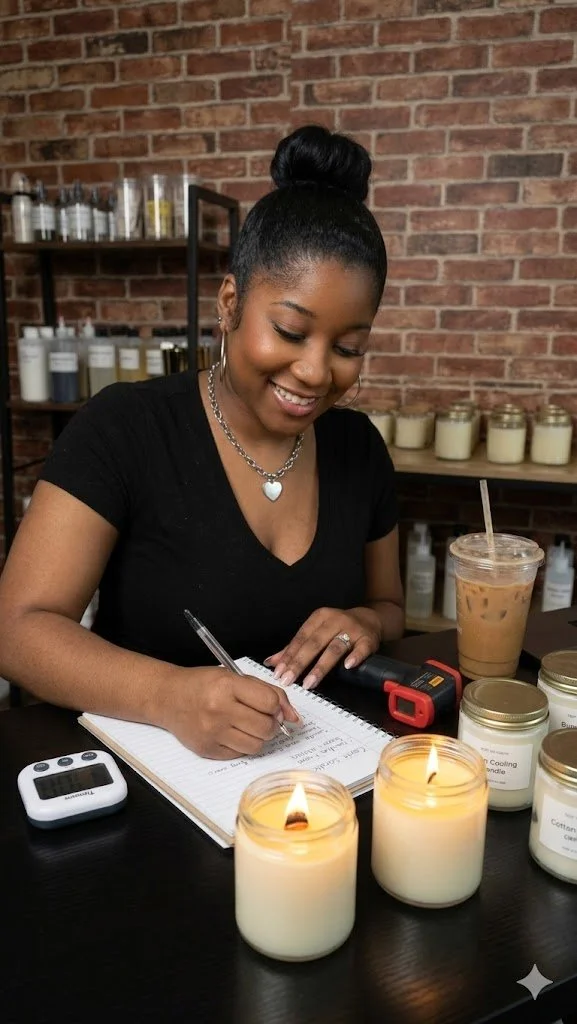
The Science of the Scent: A Deep Dive into Wick Testing and the Candle Maker’s Reality
Creating a candle seems simple enough: wax, a wick, and some fragrance, right? If only it were that easy. Any seasoned chandler will tell you that the difference between a high-end, clean-burning masterpiece and a soot-covered fire hazard comes down to one grueling, unglamorous process: wick testing.
Whether you are a hobbyist or looking to scale your small business, mastering the wick test is the ultimate "rite of passage." Here is how to properly conduct a wick test and a look behind the scenes at the pros and cons of this essential craft.
Part 1: How to Properly Wick Test Your Candle
Wick testing is the process of ensuring your chosen wick size and type are compatible with your specific wax blend, fragrance oil load, and container diameter. A wick that is too small (under-wicked) will tunnel; a wick that is too large (over-wicked) will produce a dangerous flame and soot.
1. The Setup: Consistency is Key
To get accurate results, you must eliminate variables.
Use the exact components: Test the specific jar, the specific wax (e.g., coconut wax vs. paraffin), and the specific fragrance oil percentage you plan to sell.
The Control Candle: Always make at least two or three testers with different wick sizes (e.g., a CD 12, CD 14, and CD 16) to
compare them side-by-side.
Cure Time: Do not light your candle immediately. For natural waxes like soy or coconut, let the candle cure for at least 7 to 14 days. This allows the molecular structure to stabilize, giving you a true reading of how the scent and wick will perform.
2. The Initial Burn (The 4-Hour Rule)
Place your testers in a draft-free area. Light them and let them burn for 4 hours. This is the industry standard for a "full burn cycle."
Watch the Melt Pool: By the end of the 4 hours, you want the melted wax to reach the edges of the jar (a "full melt pool"). It should be about 1/4" to 1/2" deep.
The Flame Height: A healthy flame should be steady and roughly 1/2" to 1" tall. If it’s flickering wildly or "dancing," it’s a sign of a draft or an improper wick.
3. Safety Check: The "Power Burn"
While not recommended for customers, many makers perform a "power burn" (burning for 5+ hours) during testing to see if the glass becomes dangerously hot. If you can’t touch the glass for more than a second without burning your finger, the wick is likely too large.
4. Repeat Until Empty
One burn isn't enough. A candle's behavior changes as the flame moves deeper into the jar, where heat gets trapped. Continue burning the candle in 4-hour increments until it reaches the bottom. Record your findings in a wick testing log.
Part 2: Behind the Scenes—The Pros and Cons of the Process
The "aesthetic" side of candle making shown on social media—the pouring of creamy wax and the beautiful labels—is only 10% of the job. The rest is the "behind the scenes" grind of testing.
The Pros: Why We Do It
Safety and Liability: The most important reason. Properly tested candles won't shatter jars or cause house fires. Following Product Safety & Liability guidelines is the hallmark of a professional.
Customer Loyalty: A customer who buys a candle that burns cleanly to the bottom and smells amazing (a "hot throw") is a repeat customer.
Cost Efficiency: You might think testing "wastes" supplies, but it actually saves money. It prevents you from producing an entire batch of 50 candles that don't burn correctly and having to refund unhappy buyers.
The "Science" High: There is a deep satisfaction in finally finding the "perfect" wick. It’s a moment of technical triumph that proves you are a master of your craft.
The Cons: The Hidden Struggles
The Financial Drain: Testing is expensive. You are essentially burning money—literally. Between the wax, the expensive fragrance oils, and the jars, you can spend hundreds of dollars before you ever make your first sale.
The Time Sink: Because of the required cure times, it can take weeks to finalize a single scent. If you’re trying to balance running a business and being a mom, this patience is often tested.
The Frustration of "Failures": You will have days where the wick mushrooms, the flame drowns, or the jar gets too hot. It can be demoralizing to realize you have to start the whole process over from scratch because a fragrance oil changed the chemistry.
The Math: You have to track percentages, temperatures, and measurements meticulously. For those who got into candle making for the "art," the heavy data-tracking can feel like a chore.
Final Thoughts: The Artisan Difference
Wick testing is what separates a "homemade" candle from an "artisanal" one. By taking the time to understand the science of the clean burn, you are ensuring that your creations aren't just beautiful, but high-performing and safe.
The next time you light a candle and see that perfect, steady flame, remember the hours of testing that went into that single moment of glow. It’s a labor of love, one wick at :
Conclusion: Always keep a fire extinguisher nearby during your testing phase, and never leave your test candles unattended—not even for a minute!
HOW TO BALANCE BEING MOM OF TEEN BOYS AND RUNNING A SMALL CANDLE BUSINESS
Becoming a candle maker isn’t just about melting wax and pouring it into jars—it’s about building a craft, a brand, and often a full small business from the ground up. What looks simple from the outside is actually a mix of creativity, science, patience, and entrepreneurship. Handmade candles have grown in popularity because people are looking for more meaningful, intentional products. That means small candle businesses have a real opportunity to grow—but only if they understand what it truly takes to succeed in this industry. Here’s a realistic, behind-the-scenes look at what it takes to be a candle maker running a small business.
1. Learning the Craft: Candle Making Is a Science and an Art At its core, candle making is both creative and technical. It may look easy, but achieving a high-quality candle requires understanding how wax, fragrance, and heat interact. A candle maker has to learn: ● Different types of wax (soy, coconut, beeswax, paraffin blends)
● Wick sizing and how it affects burn performance
● Fragrance load limits and scent throw balance
● Cure times for optimal performance
● Temperature control during pouring Even small mistakes can lead to issues like tunneling, weak scent throw, uneven burning, or frosting. Successful candle makers spend a lot of time testing and adjusting formulas before selling anything. This stage is where patience matters most. It’s not uncommon to go through dozens of test candles before finding the perfect combination.
2. Developing a Signature Product Style Every successful candle business eventually develops a recognizable identity. This could be in scent profiles, packaging style, or brand aesthetic. Some makers focus on:
● Clean, minimalist candles
● Bold, luxury-inspired fragrances
● Nature-based or eco-friendly products
● Cozy, home-centered collections Creating a signature style helps customers recognize your brand instantly. It also sets you apart in a crowded market where many candles can look similar at first glance. This is where creativity becomes essential. Candle making isn’t just production—it’s storytelling through scent, design, and experience.
3. Branding: More Than Just a Logo A candle business is also a brand experience. Customers aren’t just buying wax in a jar—they’re buying a feeling, a mood, or a lifestyle. Strong branding includes:
● A clear business name and story
● Consistent packaging and labeling
● A defined color palette and aesthetic
● A recognizable tone (cozy, luxury, playful, natural, etc.) For example, a brand like “Brit’s Decorative Candles” with a turquoise theme and cozy vibe creates a specific emotional identity. That identity helps customers connect with the product on a deeper level. Branding is what turns a hobby into a business that people remember.
4. Sourcing Quality Materials The quality of a candle depends heavily on the materials used. Small business candle makers must carefully choose suppliers for wax, fragrance oils, wicks, jars, and packaging. Good sourcing involves:
● Finding consistent wax suppliers
● Testing fragrance oils for performance
● Choosing eco-friendly or sustainable options when possible
● Ensuring wicks are safe and properly rated for containers Many customers today care about clean-burning ingredients and sustainability. That means small candle businesses often need to balance cost with quality and transparency. Poor materials can lead to poor performance, which directly impacts customer trust and reviews.
5. Testing, Testing, and More Testing One of the most time-consuming parts of candle making is testing. Before a candle ever reaches a customer, it has to be burned multiple times to ensure safety and performance. Testing includes:
● Burn time consistency
● Melt pool formation
● Scent throw (cold and hot)
● Wick stability
● Jar safety (no overheating or cracking) This process can take weeks for a single product line. Many candle makers burn test multiple versions of the same scent just to find the perfect balance. Skipping this step is one of the biggest mistakes new candle businesses make.
6. Packaging and Presentation Matter More Than People Think In a small business, presentation is part of the product. A candle might smell amazing, but if it doesn’t look appealing, it may not sell well. Packaging decisions include:
● Label design and readability
● Jar style and durability
● Box or wrapping presentation
● Unboxing experience Customers often buy candles as gifts, so the visual appeal matters just as much as scent quality. A well-packaged candle feels like a premium experience, even if it’s handmade. Small details—like clean labels, consistent branding, or eco-friendly wrapping—can make a huge difference in perceived value.
7. Marketing and Social Media Presence Candle making alone is not enough to build a business—you also have to learn how to sell. Most small candle businesses rely heavily on social media and online platforms. Common marketing tools include:
● Instagram and TikTok for visual storytelling
● YouTube for behind-the-scenes content
● Etsy or Shopify for online sales
● Pinterest for inspiration-driven traffic Customers want to see the process behind the product. Videos of pouring candles, packaging orders, or setting up cozy scenes often perform very well online. Marketing isn’t just about selling—it’s about building a community around your brand.
8. Pricing for Profit, Not Just Popularity One of the hardest parts of running a candle business is pricing. Many beginners underprice their products because they don’t account for all costs. Pricing must include:
● Materials
● Packaging
● Time spent making each candle
● Overhead costs (tools, supplies, marketing)
● Shipping and platform fees
● Profit margin If pricing is too low, the business becomes unsustainable. If it’s too high without justification, customers may hesitate to buy. Finding the right balance is part math, part strategy, and part understanding your target audience.
9. Customer Experience and Reputation In a small business, every customer matters. A single review can influence future sales significantly. Good customer experience includes:
● Fast and clear communication
● Careful packaging to prevent damage
● Consistent product quality
● Thoughtful presentation or small extras Happy customers often become repeat buyers and recommend your business to others. Word-of-mouth is still one of the most powerful marketing tools for handmade products. Building trust takes time, but it’s one of the most important parts of long-term success.
10. The Emotional Side of Candle Making Beyond the business side, candle making is deeply personal. Many candle makers are drawn to it because it feels creative, calming, and meaningful. But running a business also comes with challenges:
● Long hours of production
● Financial uncertainty in the beginning
● Trial and error with products
● Balancing creativity with business demands Despite the challenges, many makers stay in the industry because it allows them to create something tangible that brings comfort to others. There’s something powerful about knowing your work ends up in someone’s home, helping them relax, celebrate, or unwind.
Final Thoughts Being a candle maker with a small business takes more than passion—it takes discipline, learning, and consistency. It’s a blend of creativity and entrepreneurship, where every detail matters, from wax selection to branding to customer experience. Success doesn’t happen overnight. It’s built through testing, refining, and showing up even when it’s hard. But for those who stick with it, candle making offers something truly rewarding: the ability to turn simple materials into something that brings warmth, comfort, and light into other people’s lives. And in the end, that’s what makes it worth it.
UNDERSTANDING FRAGRANCE OIL, FLASHPOINT, AND RIGHT WAX FOR CANDLE MAKING
Creating candles is both an art and a science. While the visual appeal of a candle—the jar, color, and label—often draws people in, what truly defines a high-quality candle is how it performs when lit. Three of the most important factors that determine that performance are fragrance oil selection, flashpoint awareness, and choosing the right wax. When these three elements work together, you get a candle that smells strong, burns clean, and delivers a consistent experience from first light to the last burn. Let’s break each of these down so you can better understand how professional candle makers build candles that stand out.
The Role of Fragrance Oil in Candle Making Fragrance oil is the soul of a candle. It’s what transforms a simple wax structure into an experience—whether that’s calming lavender, warm vanilla, or fresh ocean breeze. But not all fragrance oils are created equal, and how you use them matters just as much as which ones you choose. When adding fragrance oil to wax, timing and temperature are everything. Most waxes require the fragrance oil to be added at a specific temperature range, typically between 170°F and 185°F, depending on the wax type. Adding fragrance oil too early or too late can affect how well the scent binds with the wax. If the wax is too hot, the fragrance oil can burn off before it even has a chance to fully blend. If it’s too cool, the oil may not bind properly, leading to weak scent throw or uneven burning. This is why many candle makers carefully monitor temperature using a thermometer instead of guessing. Another key factor is fragrance load, which refers to how much fragrance oil your wax can hold. Most waxes support between 6% and 10% fragrance load. Exceeding this can cause issues like sweating (oil separating from wax), poor burning, or clogged wicks. Staying within the recommended range ensures a balanced and safe burn.
Understanding Flashpoint and Why It Matters Flashpoint is one of the most misunderstood yet important concepts in candle making. Simply put, flashpoint is the temperature at which a fragrance oil can ignite if exposed to an open flame. It does NOT mean the oil will automatically catch fire during candle making, but it does affect how heat interacts with the fragrance. Each fragrance oil has its own flashpoint, usually listed by the supplier. Some oils have a low flashpoint (around 100°F–140°F), while others are much higher (above 200°F). Why does this matter? When adding fragrance oil to hot wax, you want to ensure the temperature of the wax is below the flashpoint of the oil. If the wax is too hot, some of the fragrance compounds can evaporate, weakening the scent throw. This is especially noticeable in highly volatile scents like citrus or herbal blends. However, flashpoint is not just about mixing—it also affects storage and shipping. Oils with lower flashpoints are more sensitive to heat and may change slightly if stored in warm environments. This is why professional candle makers store fragrance oils in cool, dark places to maintain consistency. Understanding flashpoint helps you make better decisions about when to add fragrance oil and how to preserve scent strength throughout your candle-making process.
Choosing the Right Wax for Your Candles Wax is the foundation of every candle. It determines how your candle burns, how well it holds fragrance, and even how it looks once set. There are several types of wax commonly used in candle making, and each has unique strengths. 1. Soy Wax Soy wax is one of the most popular choices among small-batch candle makers. It is natural, renewable, and burns cleanly with minimal soot. Soy wax also holds fragrance oil well, although it may require a slightly higher fragrance load to achieve a strong scent throw. One of the key benefits of soy wax is its smooth, creamy appearance. However, it can sometimes develop frosting (white crystalline patterns), which is natural and does not affect performance. 2. Paraffin Wax Paraffin wax is widely used in commercial candles because it offers excellent scent throw and vibrant color retention. It holds fragrance oil very well and provides a strong hot and cold scent throw, meaning your candle smells strong both unlit and lit. However, paraffin is petroleum-based, which may not appeal to customers looking for natural products. It also tends to produce more soot than soy or coconut wax blends. 3. Coconut Wax Coconut wax is considered a premium option in candle making. It burns slowly, holds fragrance exceptionally well, and provides a smooth, luxurious finish. It is often blended with other waxes, such as soy, to improve structure and stability. Because of its high fragrance retention, coconut wax is often used in high-end candle brands that focus on strong scent performance and clean burning. 4. Beeswax Beeswax is one of the oldest natural waxes used in candle making. It has a naturally subtle honey scent and burns very cleanly. However, it does not hold fragrance oils as strongly as other waxes, which makes it less common for heavily scented candles.
How Wax, Fragrance, and Flashpoint Work Together The best candles are created when wax type, fragrance oil, and flashpoint awareness are balanced correctly. For example, coconut-soy blends pair beautifully with fragrance oils because they hold scent well and allow for a strong, clean burn. On the other hand, soy wax requires careful temperature control to ensure fragrance oils fully bind without evaporating. If you ignore flashpoint or add fragrance oil at the wrong temperature, even the best wax won’t perform well. Similarly, using a wax that doesn’t match your fragrance load or scent style can lead to weak hot throw or uneven burning. Think of candle making as a system: wax is the structure, fragrance oil is the personality, and flashpoint is the safety rule that keeps everything working properly.
Final Thoughts Mastering fragrance oil, flashpoint, and wax selection is what separates hobby candle makers from consistent, high-quality brands. When you understand how each element interacts, you gain full control over your candle’s performance. Whether you’re creating candles for personal use or building a brand like a small business candle line, paying attention to these details ensures your products are not only beautiful but also reliable and memorable. Great candles aren’t made by accident—they’re made through understanding, precision, and intentional choices at every step.
WHAT TAKE TO BE A CANDLEMAKER WITH A SMALL BUSINESS
Becoming a candle maker isn’t just about melting wax and pouring it into jars—it’s about building a craft, a brand, and often a full small business from the ground up. What looks simple from the outside is actually a mix of creativity, science, patience, and entrepreneurship. Handmade candles have grown in popularity because people are looking for more meaningful, intentional products. That means small candle businesses have a real opportunity to grow—but only if they understand what it truly takes to succeed in this industry. Here’s a realistic, behind-the-scenes look at what it takes to be a candle maker running a small business.
1. Learning the Craft: Candle Making Is a Science and an Art At its core, candle making is both creative and technical. It may look easy, but achieving a high-quality candle requires understanding how wax, fragrance, and heat interact. A candle maker has to learn:
● Different types of wax (soy, coconut, beeswax, paraffin blends)
● Wick sizing and how it affects burn performance
● Fragrance load limits and scent throw balance
● Cure times for optimal performance
● Temperature control during pouring Even small mistakes can lead to issues like tunneling, weak scent throw, uneven burning, or frosting. Successful candle makers spend a lot of time testing and adjusting formulas before selling anything. This stage is where patience matters most. It’s not uncommon to go through dozens of test candles before finding the perfect combination.
2. Developing a Signature Product Style Every successful candle business eventually develops a recognizable identity. This could be in scent profiles, packaging style, or brand aesthetic. Some makers focus on:
● Clean, minimalist candles
● Bold, luxury-inspired fragrances
● Nature-based or eco-friendly products
● Cozy, home-centered collections Creating a signature style helps customers recognize your brand instantly. It also sets you apart in a crowded market where many candles can look similar at first glance. This is where creativity becomes essential. Candle making isn’t just production—it’s storytelling through scent, design, and experience.
3. Branding: More Than Just a Logo A candle business is also a brand experience. Customers aren’t just buying wax in a jar—they’re buying a feeling, a mood, or a lifestyle. Strong branding includes:
● A clear business name and story
● Consistent packaging and labeling ● A defined color palette and aesthetic
● A recognizable tone (cozy, luxury, playful, natural, etc.) For example, a brand like “Britt’s Decorative Candles” with a turquoise theme and cozy vibe creates a specific emotional identity. That identity helps customers connect with the product on a deeper level. Branding is what turns a hobby into a business that people remember.
4. Sourcing Quality Materials The quality of a candle depends heavily on the materials used. Small business candle makers must carefully choose suppliers for wax, fragrance oils, wicks, jars, and packaging. Good sourcing involves:
● Finding consistent wax suppliers
● Testing fragrance oils for performance
● Choosing eco-friendly or sustainable options when possible
● Ensuring wicks are safe and properly rated for containers Many customers today care about clean-burning ingredients and sustainability. That means small candle businesses often need to balance cost with quality and transparency. Poor materials can lead to poor performance, which directly impacts customer trust and reviews.
5. Testing, Testing, and More Testing One of the most time-consuming parts of candle making is testing. Before a candle ever reaches a customer, it has to be burned multiple times to ensure safety and performance. Testing includes:
● Burn time consistency
● Melt pool formation
● Scent throw (cold and hot)
● Wick stability
● Jar safety (no overheating or cracking) This process can take weeks for a single product line. Many candle makers burn test multiple versions of the same scent just to find the perfect balance. Skipping this step is one of the biggest mistakes new candle businesses make.
6. Packaging and Presentation Matter More Than People Think In a small business, presentation is part of the product. A candle might smell amazing, but if it doesn’t look appealing, it may not sell well. Packaging decisions include:
Label design and readability
● Jar style and durability
● Box or wrapping presentation
● Unboxing experience Customers often buy candles as gifts, so the visual appeal matters just as much as scent quality. A well-packaged candle feels like a premium experience, even if it’s handmade. Small details—like clean labels, consistent branding, or eco-friendly wrapping—can make a huge difference in perceived value.
7. Marketing and Social Media Presence Candle making alone is not enough to build a business—you also have to learn how to sell. Most small candle businesses rely heavily on social media and online platforms. Common marketing tools include:
● Instagram and TikTok for visual storytelling
● YouTube for behind-the-scenes content
● Etsy or Shopify for online sales
● Pinterest for inspiration-driven traffic Customers want to see the process behind the product. Videos of pouring candles, packaging orders, or setting up cozy scenes often perform very well online. Marketing isn’t just about selling—it’s about building a community around your brand.
8. Pricing for Profit, Not Just Popularity One of the hardest parts of running a candle business is pricing. Many beginners underprice their products because they don’t account for all costs. Pricing must include:
● Materials
● Packaging
● Time spent making each candle
● Overhead costs (tools, supplies, marketing)
● Shipping and platform fees
● Profit margin If pricing is too low, the business becomes unsustainable. If it’s too high without justification, customers may hesitate to buy. Finding the right balance is part math, part strategy, and part understanding your target audience.
9. Customer Experience and Reputation In a small business, every customer matters. A single review can influence future sales significantly. Good customer experience includes:
● Fast and clear communication
● Careful packaging to prevent damage
● Consistent product quality
● Thoughtful presentation or small extras Happy customers often become repeat buyers and recommend your business to others. Word-of-mouth is still one of the most powerful marketing tools for handmade products. Building trust takes time, but it’s one of the most important parts of long-term success.
10. The Emotional Side of Candle Making Beyond the business side, candle making is deeply personal. Many candle makers are drawn to it because it feels creative, calming, and meaningful. But running a business also comes with challenges:
● Long hours of production
● Financial uncertainty in the beginning
● Trial and error with products
● Balancing creativity with business demands Despite the challenges, many makers stay in the industry because it allows them to create something tangible that brings comfort to others. There’s something powerful about knowing your work ends up in someone’s home, helping them relax, celebrate, or unwind.
Final Thoughts Being a candle maker with a small business takes more than passion—it takes discipline, learning, and consistency. It’s a blend of creativity and entrepreneurship, where every detail matters, from wax selection to branding to customer experience. Success doesn’t happen overnight. It’s built through testing, refining, and showing up even when it’s hard. But for those who stick with it, candle making offers something truly rewarding: the ability to turn simple materials into something that brings warmth, comfort, and light into other people’s lives. And in the end, that’s what makes it worth it.